






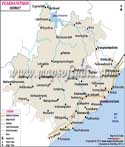
About
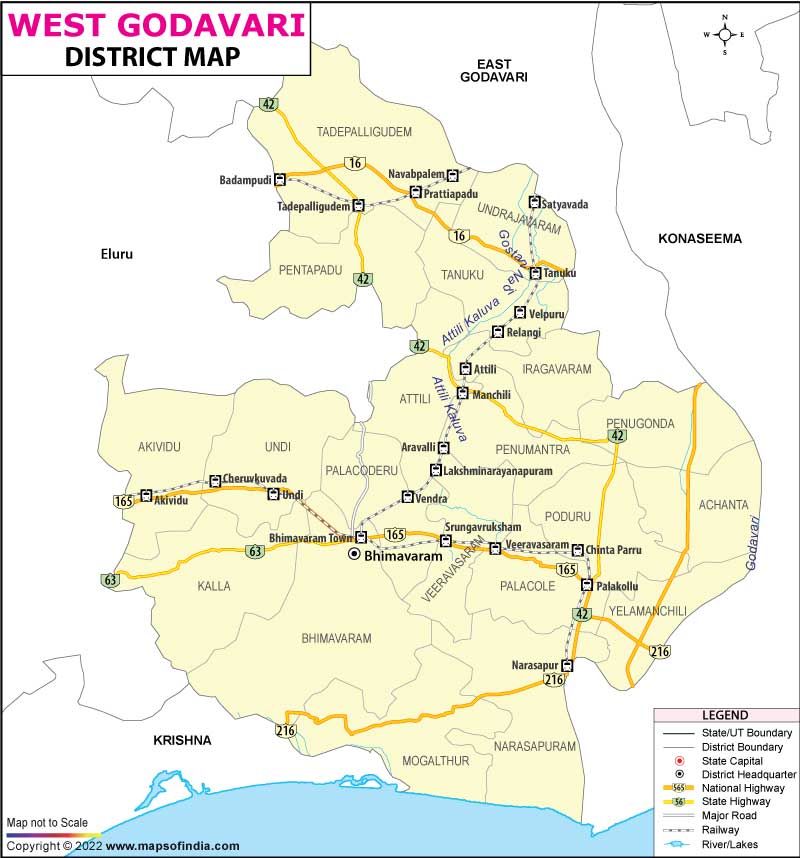
West Godavari District is one of the most hydrographically rich districts, in terms of agricultural population density, and economically developed among the Coastal Andhra districts of Andhra Pradesh, India. This old town is located on the entire alluvial plain of the lower Godavari River basin and also serves as a vital hub for aquaculture trade on the global level, extensive paddy cultivation, and intricate inland water trade networks. The administrative headquarters are in the historic coastal town of Bhimavaram, a thriving urban metropolis, famous throughout the world for its multi-million dollar shrimp export trade and commercial infrastructure.
The title "West Godavari" is directly linked to the topography of the region, the administrative mapping, and a profound respect for the sacred Godavari River, the second-longest river in India. The river has always been a lifeline for the female and has laid down an extraordinarily rich layer of silt over the deltaic plains over the last millennia. In 1925, the large, old, and historic Godavari District was divided into two Parts in a systematic manner in response to the development of British colonial administration and the need for efficient revenue collection. As a consequence of this, based on the geographical orientation with respect to the Godavari River. The territory to the west of the main flow of the Akhanda Godavari was carved out to become West Godavari District, and the title has become a permanent reminder of the region's topography and its complete reliance on the channel of the river.
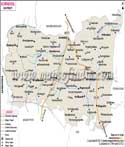
The restructured West Godavari District is geographically located in the best coastal deltaic zone in the eastern axis of the state of Andhra Pradesh. It is on the northern border with the Eluru District that separates it from the interior upland plateaus and forest tracts. The majestic Godavari River and its main distributaries to the east form a natural physical border between it and Dr. B.R. Ambedkar Konaseema District. The district is bordered to the south and the southwest by the vast ocean of the Bay of Bengal and the newly formed Krishna District. The district is presently spread over a geographic area of about 2178 km², following the strategic administrative restructuring of the state. The region is an area of flat land that is broken up with a network of canals, channels, and natural waterways.
History & Culture
The history and culture of West Godavari District are highly enriched, having multiple layers of ancient spiritual movements, coastal dynastic conflicts, and global maritime merchant guilds that have developed in harmony.
After the fall of the early Chalukyas, the area was ruled by several prominent South Indian ruling families. The Kakatiya Dynasty of Warangal made its mark in the architectural and economic fields in the 13th century, building magnificent stone temples and establishing irrigation systems in the area. After that, he became a part of the Reddi Kings of Rajamahendravaram and later the majestic Vijayanagara Empire, which saw the temple architecture of the region achieve monumental proportions and a historic golden age for classical Telugu literature under its benign rule.
The socio-cultural scenario in West Godavari is unique and has a special mix of ancient Vedic culture and prevalent agrarian culture. The history of the local culture is marked by the peaceful and harmonious living of different religious philosophies, and the harmonious living of the ancient Buddhist values, the classical Hindu temple ritual, and the historic multi-faith tradition exists in complete harmony.
The festivals are celebrated in West Godavari District with great fervour and pride among the people. Sankranti is celebrated with tremendous enthusiasm in all the rural villages with elaborate rangoli designs, bullock carts, and lots of community feasting. Major regional temples hold annual Brahmotsavams that attract millions of pilgrims, and include colorful processions and car festivals with huge, elaborately designed wooden chariots rolling through the old streets. It is the fresh coconut, the local river fish, and the aromatic spices, which make the culinary culture of West Godavari unique in India and make some of the local delicacies like the famous Godavari Chepala Pulusu, sweet Pootharekulu, and an unmatched collection of traditional spicy pickles unique.
Economy
West Godavari District's economy is exceptionally well-developed, depending on hyper-productive deltaic agriculture, globally connected aquaculture systems, and big public and corporate institutions. The district is known as an absolute power house in commercial shrimp and fish farming, with huge processing units, cold storage facilities, and automatic packaging systems dominating the export supply chain to the USA, Europe, and Japan. This large-scale aquaculture scheme is supported by a highly developed agrarian foundation throughout the deltaic landscape, with advanced canal irrigation, supplying thousands of acres of fertile land that produce substantial amounts of paddy, coconut, sugarcane, and oil palm crops, generating high annual revenues.
The government sector is a big employer and a strong structural regulatory sector in West Godavari District. It is a major administrative centre for the coastal areas with a large concentration of offices of state and central government bodies, including the Bhimavaram Municipal Corporation, the District Collectorate, and the prominent judicial complexes.
Industrial stability of the secondary sector of the district is provided by the public sector and heavy enterprises backed by the state. Thousands of technically qualified technicians and labourers are working on major public utility activities such as the large-scale thermal and hydro-power distribution network under AP Transco and the large technical training centres under the South Central Railway zone. In addition, the state-owned financial institutions and nationalised banks have their zonal offices in the district, which supply huge credit lines for huge aquaculture operations, agro-based industrial plants, and large-scale agricultural cooperative societies.
The contribution of services in West Godavari District has grown at an unprecedented rate and has come to constitute a significant part of the regional economy. The trade, transport, and warehousing sectors are very large and rely on advanced cold storage systems to ensure the safe storage, handling and transport of millions of tons of seafood and farm-to-seafood products destined for export markets around the world.
Tourism
The journey to West Godavari District is a mesmerizing experience that blends majestic spiritual heritage, ancient historical sites and pristine coastal beauty. Blessed by the lap of the Godavari River delta, it is an enriching journey in time for heritage travelers, nature lovers and spiritual seekers alike and is no doubt one of the best places to visit on the tourist map of coastal Andhra Pradesh.
The magnificent Somarama Temple in the busy Bhimavaram city is an absolute cornerstone of the district's spiritual itinerary. This ancient temple complex is one of the revered Pancharama Kshetras or five holy temple complexes dedicated to Lord Shiva and has great mysticism and architectural significance. It is the unique sacred Shiva Lingam of ‘Swayambhu' that attracts pilgrims from all over with its unique feature of changing its colour with the phases of the moon. The shrine is built in a calm temple pond with lotus flowers. The Dravidian structural frameworks are also well preserved, creating a serene and peaceful atmosphere.
The monumental Ksheerarama Temple is another important landmark of the Pancharama Kshetras. It is located in the historic town of Palakollu, which continues the spiritual journey. Its magnificent 9-story tall and grand Gopuram (entrance tower) is one of the tallest towers in the region. It is an example of the highest level of medieval South Indian craftsmanship. The inner sanctum contains a highly sacred, milky white marble Shiva Lingam said to have been set up by Lord Vishnu.
The district's abundant tourism profile seamlessly merges into coastal escapes on the Bay of Bengal. The picturesque town of Narsapur is renowned for its promenade along the banks of the Vashishta Godavari, its historic Dutch Dutch buildings and its world-famous traditional hand-made crochet lace industry at Narsapur situated at the mouth of the Vashishta Godavari River where the river meets the sea.
Demographics
The demographic profile of West Godavari District depicts a demographically progressive, well educated and a balanced population with indicators of socio-economic development showing a steady growth in all the urban and rural blocks. The total population of West Godavari District is approximately 1,779,935 based on official census data processed carefully taking into account the territorial boundaries of the district as it is now.
With regard to literacy, the district has an excellent average of 74.63%, demonstrating the large number of top quality public schools, qualified technical engineering schools, and superior marine research universities in the region. The literacy rates for males and females are about 79.35% and 69.95% respectively and there is clearly a narrowing gender gap in educational access which is due to the intensive state welfare programmes and community programs of the local population.
Telugu is the absolute primary language of the district, over 96% of the population speak this as their primary language for day to day life, corporate work and administration. Urdu and Hindi are small minority languages, used mostly in old pockets of cities for trading, while English is widely used in higher education, corporate offices and international seafood trading networks.
The sex ratio is 1,001 females for every 1,000 males, which is considered very balanced, reflecting good social health, fair access to health services and positive social indicators in comparison to other districts in the region.
Administration
The administrative structure of West Godavari District is extremely precise to facilitate decentralization, proper revenue collection and quick implementation of public welfare works from the collectorate to each rural hamlet. The district executive leadership is based on the West Godavari Collectorate in Bhimavaram, which is led by the District Collector and District Magistrate, who is supported by a well-established system of civil servants, municipal officers and regional development officers.
The district has been subdivided into two large revenue divisions each having a separate Sub-Collector or Revenue Divisional Officer for efficient administration of lands and governance of revenue;
Bhimavaram District: Headquartered in Bhimavaram City, it oversees the centrally located highly urbanized area, aquaculture trading blocks and infrastructure facilities of the Municipal Corporation.
Narsapur Division: With headquarters in the ancient coastal port city of Narsapur, it has a special interest in coastal areas, sea transport and the deltaic farming mandals.
These are broken up into 19 Tehsils (officially and locally called Mandals), which are the main decentralised units for providing public services. A Tahsildar is responsible for each mandal to maintain land registers, oversee the public food distribution system and ensure infrastructure development in the rural areas. The basic administrative structure includes 396 revenue villages to be managed by a very robust system of local Gram Panchayats. The local village panchayats work in complete harmony with the mandal and divisional offices.
| Official Name | West Godavari |
| Location | Andhra Pradesh |
| Area | 2178 sq. km |
| Population | 1779935 |
| Language | Telugu |
FAQs
Q1: How many villages are there in the district?
There are 318 villages in the West Godavari district.
Q2: What is the population of the district?
1779935 is the population of West Godavari district.
Q3: What is the district famous for?
West Godavari district is famous as the Granary of Andhra Pradesh because of the high production of paddy and commercial shrimp aquaculture exports. It is also recognized for the ancient Somarama and Ksheerarama Pancharama temples.
Q4: What are the central rivers that irrigate the West Godavari District?
The western branch of the Godavari River, with its large distributaries, the Vashishta Godavari, is the main source of irrigation for the district.
Q5: Why is Narsapur Town important?
Narsapur is well known as a premier centre for creating handmade crochet lace work. This special cottage industry dates back to the 19th century, and thousands of women work in it in rural and semi-urban areas.
Q6: What are the names of the Pancharama Kshetras in this district?
Somarama Temple and the Ksheerarama Temple are the two Pancharama Kshetras of the district.
Q7: What are the major national transport networks available to the district?
The Golden Quadrilateral highway (NH16) and NH216.
Last Updated on : July 22, 2026
