



Ayatollah Ali Khamenei
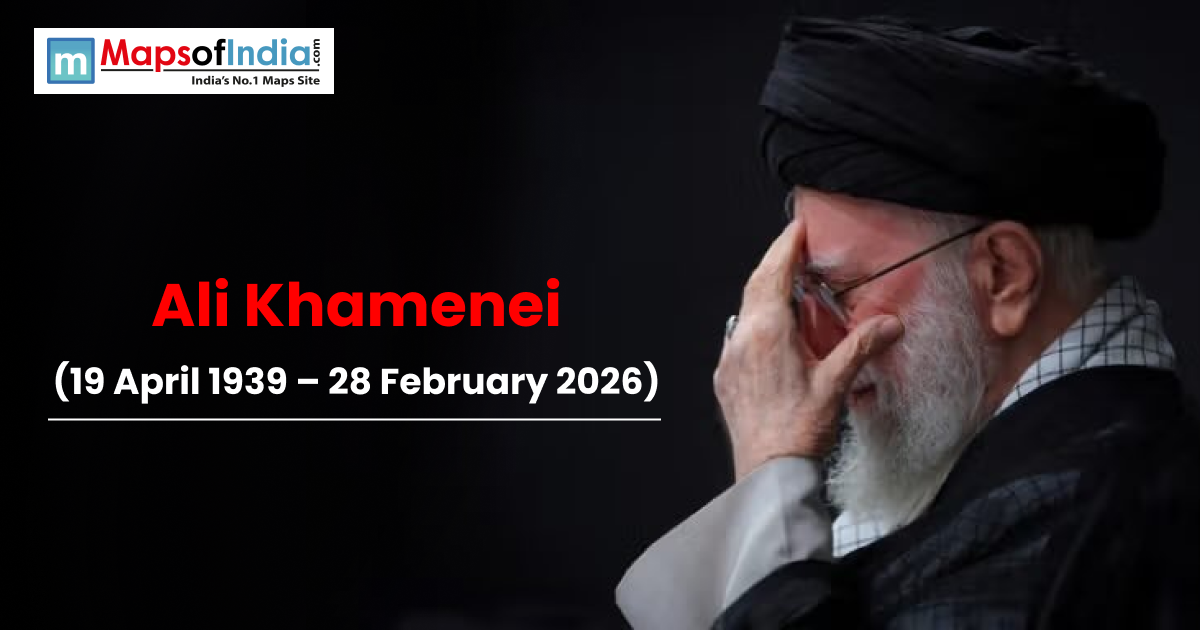
Ayatollah Ali Hosseini Khamenei (April 19, 1939 -2026) was the second Supreme Leader in the history of the Islamic Republic of Iran and one of the most influential leaders in the history of the contemporary Middle East. Khamenei shaped the political system, foreign policy, military philosophy, and ideology of Iran over the decades in which he was in power; the supreme power of Iran since 1989 up to his death in 2026. His leadership characterized the consolidation of Iran after the revolution and its many-sided relations with the world.
Early Life and Religious Education
Ali Khamenei was born in a city called Mashhad, where Shi’ia Islam is a leading centre and one of the holiest cities in Iran. He grew up in a religious family; his father was a cleric who made sure that he got a traditional Islamic education since his childhood.
Khamenei proceeded to study in the most important city of the country, Qom, where he studied Islamic jurisprudence and theology. It is there that he enrolled on the followership of Ruhollah Khomeini, who instructed him on the Islamic ruling and the fight against the monarchy, which really influenced him.
Opposition to the Shah and Revolutionary Activities
Shah Mohammad Reza Pahlavi had been the ruler of Iran in the 1960s and 1970s. Modernization policies of the Shah and his strong associations with the Western powers led to the resistance against him by the religious leaders and traditionalists. Khamenei was inspired by the ideology of Khamenei and became involved in the underground activities of revolutionaries.
He was detained several times by the security experts of Shah and was subjected to interrogation and incarceration. These events bolstered his revolutionary background and cemented his image as a dedicated cleric who would give anything to the cause.
Role in the 1979 Islamic Revolution
In 1979, the monarchy was toppled by the Islamic Revolution to form the Islamic Republic. Following the revolution, Khamenei joined the new ruling elite very quickly. He was a member of the Revolutionary Council and worked in the areas of defense and national security.
In the year 1981, he encountered a serious attempt to assassinate him in the process of delivering a speech when a bomb was detonated. The assault permanently disabled his right arm but made him even greater among revolutionaries.
Presidency During the Iran–Iraq War (1981–1989)
In 1981, Khamenei was elected the President of Iran. His presidency was in agreement with the devastating Iran-Iraq war that started in 1980. The war ate up the national resources, huge numbers of people were killed, and it profoundly influenced the political culture in Iran.
Even though the system of executive power was distributed in the constitutional system of the day, Khamenei worked significantly in ensuring unity during the war and the protection of the revolutionary system. His presidency made the Islamic Republic ideologically strong at a time when it was most vulnerable.
Appointment as Supreme Leader (1989)
Iran was uncertain with succession when Ayatollah Khameini passed on in 1989. Although he was not one of the senior clerics of the day, Khamenei was chosen by the Assembly of Experts as the new Supreme Leader. His appointment was made easy because of the revisions made to the constitution.
Being the Supreme Leader, he was made the supreme power of Iran. He manipulated the armed forces, judiciary, intelligence services, state broadcasting and had a massive say in foreign policy. His supervision was over the presidency and the parliament.
Domestic Governance and Political Challenges
During the decades, Khamenei established his power and reinforced conservative institutions. Although some reformist leaders like Mohammad Khatami attempted to incorporate more political openness into the country in the late 1990s, some of the reforms were opposed by institutions that were affiliated with the Supreme Leader.
The contentious presidential election in 2009 led to mass discontent in the state, known as the Green Movement. Khamanei was a firm supporter of the official election results and gave security agents the power to restore sanity. The crackdown was one of the strongest internal crises of his leadership.
Later protests were contributed by economic hardship, inflation, unemployment and sanctions. In 2017, 2019, and the country-wide unrest after the death of Mahsa Amini in 2022, demonstrations were very severe. Khamenei always stressed national stability, ideological standing and opposition to foreign influence.
Foreign Policy and Regional Strategy
The foreign policy of Khamenei was based on the counter to western influence, particularly the influence of the United States and Israel. Iran, under his leadership, grew to a greater region in terms of alliances, thus strengthening its ties with the allied governments and even non-state actors within the Middle East.
During his time in office, the Iranian nuclear program became a big world affair. The world power negotiations resulted in a nuclear deal in 2015, yet the situation was not calmed down following the changes in international dynamics and the reinstatement of sanctions.
Khamenei considered regional participation as a key point of the Iranian security policy. Its advocates explained it as defensive depth; the critics said that it exacerbated the instability of the region.
Health Concerns and Final Years
Later in his life, there were a lot of speculations about the health of Khamenei. This minimized his public events and medical speculation, even though the official broadcasting channels tended to suppress the issue, which led to a discussion on succession planning in the political system of Iran.
By the middle of the 2020s, Iran was under growing economic pressure, geopolitical pressure, and internal instability. The issue concerning who was going to replace him became the focus of Iranian politics.
Death in 2026
Ayatollah Ali Khamenei passed away in 2026 at the age of 86. His demise put an end to one of the longest and most impactful leadership eras in contemporary Iranian history. The news also triggered the countrywide mourning events, state funerals, and masses of people in Iran.
His death caused instant political processes within the constitution. The Assembly of Experts began to work on a new Supreme Leader, which was a closely followed event in the international sphere as well as within the country. The regional and international powers paid close attention to the transition and observed that it could affect the geopolitics of the Middle East.
Khamenei was interred in his hometown of Mashhad during a funeral that was attended by the high-ranking officials of Iran, the military, clerics, and external guests.
Legacy
The legacy of Ali Khamenei is a very complicated one and still controversial. The Islamic Revolution was the cause of the revolution, which he guarded steadfastly for supporters, as well as maintaining the independence of Iran and enhancing its regional standing against the decades of sanctions and external pressure.
His time was characterized by critics as a curtailment of political rights and freedom, disagreement, and economic hardship that curtailed the chances of the younger generation.
In history, Khamenei will be remembered as the leader who led Iran during the reconstruction after the war, the long period of international isolation, the inner reform movements and the change of global allies. His almost forty years of rule as Supreme Leader transformed the Iranian institutions and established a firm place for Iran as a key player in Middle East politics.
No matter the opinion one may have, the life and leadership of Ali Khamenei made a permanent mark in the history of Iran, one that will remain in the history of the nation even after his demise.
