



Rabindranath Tagore Biography
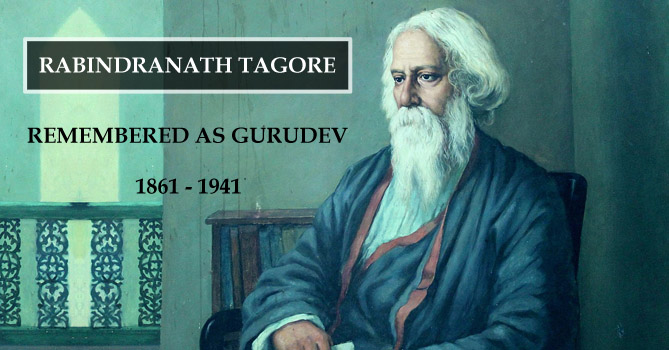
Fondly remembered as “Gurudev”, Rabindranath Tagore was an iconic figure in Bengal’s cultural landscape and had a profound influence in shaping national consciousness during the freedom struggle. When his poetic composition Gitanjali won him the Nobel Prize in Literature (1913), he was the first Indian-in fact, the first non-European-to receive this honour. Born on 7 May 1861, he was the youngest of the thirteen children of Debendranath Tagore and Sarada Devi. Although his early education was at home, Tagore would soon develop a literary genius that would quickly distinguish him a writer, thinker, and poet of the highest order.
Notable works
Tagore’s talent was multifaceted, although he found himself in poetry. Gitanjali, which was released in 1910, was a collection of poems that received the prestigious Nobel Prize in literature. Other important works are Manasi (1890), Sonar Tari (1894), Gitimalya (1914), and plays such as Raja (1910), Dakghar (1912), etc. Tagore was also an accomplished artist, leaving behind several paintings that are a treasure in themselves. He was also interested in music, and wrote a few songs and provided music for them.
Tagore and education
Rabindranath Tagore had a tough time sticking to formal education, and preferred to spend his time is silent contemplation. When he was sent to the famous Presidency College to pursue studies, he could tolerate it only for a single day.
According to him, true education served a higher purpose: “[It] knock[s] at the doors of the mind. If any boy is asked to give an account of what is awakened in him by such knocking, he will probably say something silly. For what happens within is much bigger than what comes out in words. Those who pin their faith on university examinations as the test of education take no account of this.” These ideas would lead him to start an experimental school at his ashram Shantiniketan, with an exclusive focus on humanistic and holistic education.
Political views
As far as the national freedom movement was concerned, Tagore presented a dilemma to the nationalists. Although he opposed British imperialism-even going to the lengths of renouncing his knighthood in protest of the Jallianwala Bagh massacre-he remained even more averse to the idea of a revolution, armed or otherwise. For Tagore saw the colonisation as a political malaise inflicted on India by its social shortcomings. He maintained internal reform to be the sole objective, stressing on education as the ultimate solution to India’s problems. Such views, of course, were not welcome by most, and he even escaped assassination once. He played the crucial role of peacemaker during the standoff between Gandhi and Ambedkar regarding special status for the untouchables, breaking a pernicious deadlock.
Tagore was brimming with patriotism and resilience, which showed up in his landmark songs “Chitto Jetha Bhayshunyo” (“Where the Mind is Without Fear”) and “Ekla Chalo Re” (“If They Answer Not to Thy Call, Walk Alone”).
Tagore the immortal
The legacy of Tagore still shapes young minds and hearts in India, beckoning them to expand their horizons and challenge the established order. It’d be unfair to classify this man of many talents as a poet, leader or writer, but perhaps his contribution as a social reformer was the most important. At a time when India was struggling with several disruptive forces, his ideas on gender, culture, freedom and education were a much-needed binding force.
