




Introduction
Jammu is part of the union territory of Jammu and Kashmir and is known for its rich geography, and cultural heritage. It lies in the northern region of India and has rich diverse terrains. The city is referred to as the “city of temples” and has many historic temples and shrines. Jammu is also known for its traditional cuisine, crafts, art, and festivals.
History
Jammu region has a long history that goes back to the Vedic period. It was part of the Madra kingdom in the early Rigvedic period. The kingdom had a stretch from the Sutlej River to the Indus River. The Devika River was the most sacred river of Jammu and has been mentioned in many sacred texts from the period. Vedic legends argue that King Vyushitashva of the Puru dynasty who was a descendent of King Madra ruled over Madradesha. The kingdom of Vyushitashva was divided into 7 parts. For a long time Shakala was the capital of Madras and Sialkot was the capital of Shalvas, which was the branch of Madras. Shambarasm, the Asura Kings of Harappa controlled this region from 11500-11300 BCE. It was later annexed by Indra in 11325 BCE. Kuru-Panchala kings later extended this kingdom up to the Pir Panjal hills in the north. Therefore, the Shalva (Sialkot) and Jammu Kashmir region up to the Jhelum region came under the Kuru-Panchala Kingdom.
Even though we don't have much evidence suggesting it, it can be said that a part of present-day Kashmir valley was a glacial lake, the Satisar Lake in the Rigvedic period. The Baramulla Pass was a notable natural feature in this lake. Hari Parvat of Srinagar was also probably in this glacial lake. Nilamat Purana states that Pishachas, a tribe in the early Rigvedic period, inhabited Kashmir. Parvati some time later requested Rishi Kashyapa to come to Kashmir and purify the area of Panchala Giri. Rishi Kashyapa with his son Nila Naga came to Anantanag to help Shiva. They defeated the Pishachas and then lived in the Pir Panjal hills. With time, the Pir Panjal hill came to be known as Kashyapa-Meru. Therefore the name of Kashmir has evolved.
Nila Naga was the first king of Kashmir. If we go by the information given in Nilamata Purana, Nila Naga exiled Sadulanga from Kashmir and allotted Mount Ushiraka to him. Naga Mahapadma reigned at Wular Lake and thus the Naga reign was established in the Jammu-Kashmir region around 11200 BCE. After gaining the support of Pishachas they emerged as a strong rival to Kurus and Panchalas. Legends tell that Babhruvahana who was the son of Arjun and Naga Princess Chitrangada came to the Jammu region and founded the city of Babhrupura known as Babor today. In Kalhana's Rajatarangini it is referred to as Babbapura. The traditional history of Jammu gives the information that Ayodhya king Sudarshan had two sons Agnivarna and Agnigira. Agnigira was the youngest among the two And he migrated to the Shivalik hills to settle in the region of present-day Kathua. After defeating the local kings in the region he gained control over Bupanagari. The cities of Pushpavati were built by him.
Kalidas in his work abruptly ends the history of Raghuvamsa after the death of Agnivarna. It appears that the Kingdom of Ayodhya became politically vulnerable because of internal conflict for succession after his death. Kalidas writes that Agnivarna's wife ascended the throne since she was pregnant with his child. This might have been the reason that the younger brother had to migrate to the Jammu region. Agnigira’s son Vayusharb Succeeded him and Muni Uttamacharya who was his contemporary built the city of Airavati. Jambu Lochan was the younger brother of Bahu Lochan and he founded the city named Jambupura ( old Jammu town).
King Daya Karan’s brother Dharma Karan ruled over Jammu and his descendants were able to maintain power in the region for 653 years. King Somadatta was the last ruler in this lineage and after him, King Gonanda I of Kashmir took over in 3190 BCE. This marked the beginning of the Gonanda dynasty. King Shakti Karan is one of the most known and controversial rulers in the region who introduced the Shastra Era around 3777 BCE. He is also credited for innovating the Brahmi script that later influenced other scripts like the Sharada and Dogra scripts. During the time of the Mahabharata, King Shiv Prakash had his rule in Jammu. King Shalya of Madra later invaded his kingdom and forced his descendants to move to the mountains. In 1503 BCE Jammu was invaded by Mangal Chand Katoch of Kangra. This led to the rise of Bhanu Yaksha, who later established his rule in the region.
In the next few centuries foreign powers, like the Yavanas of Takshashila and the Kushanas, had a great influence on the political state of Jammu. Jammu Fort was built by King Kaid Raja. During Alexander’s invasion of India, King Puru Sen of Madra country ruled over Jammu and other regions. His son-in-law, Jammu King Ajay Singh, fought alongside him. Adi Rai ruled Jammu during the Vikramaditya era. His descendants, including Dev Rai, Gandharva Rai, and Kadamba Rai, were the successive rulers of Jammu until Jog Rai came to the throne in 235 BCE. King Suraj Hans was the ruler of Jammu during the Sasanian Empire. He facilitated the translation of the Panchatantra into Persian.
Gulab Singh served as a key military leader under Maharaja Ranjit Singh of the Sikh empire. In 1822, he became ruler of Jammu. With Sikh power weakening, it was Singh who moved early to engage directly with British authorities. His dealings led to recognition by Britain: via the 1846 Treaty of Amritsar, he gained status as Maharaja over Jammu and Kashmir. This agreement handed him authority across regions including Ladakh and adjacent areas. Later came Ranbir Singh, who stepped into leadership and brought shifts toward progress across the area. Hari Singh was the last ruler of the princely state of Jammu and Kashmir. His years in charge unfolded amid fast-moving political turns, particularly once British rule ended in 1947. Though first aiming for neutrality, events pulled him away from staying apart.
A surge of armed tribesmen crossing from Pakistan made joining India seem less like choice, more like necessity - leading to the signing of legal integration. Beginning in 1947, Jammu and Kashmir joined India. This sparked the first conflict between India and Pakistan. After independence, Jammu stayed within the boundaries of the larger state, protected by a unique constitutional arrangement known as Article 370. For nearly seventy years, that clause shaped how power flowed across the region's politics. However in 2019, everything shifted when the area split into two separate federal units: one named Jammu and Kashmir, another called Ladakh. Seen by many as the nation’s most disputed move in modern times, the restructuring altered both administrative control and local belonging in deep, lasting ways.
Culture
Woven through time, Jammu's way of life draws from belief systems and routines passed across generations. Central to this setting stands the legacy of the Dogra people, influencing norms and shared values. Known for courage, open welcome, and spiritual dedication, they speak Dogri - a tongue holding ages of stories, melodies, and spoken wisdom. With harvests and festivals come dances such as Kud, expressions of collective spirit rooted in soil and season. Sound shapes moments too; local tunes bring pulse to both routine days and high occasions alike.
Food reveals much about life in Jammu. Rice paired with kidney beans, a local cheese called Kaladi, dishes like sour meat and tangy pumpkin reflect farming practices alongside inventive cooking methods. Art forms such as painted scrolls from mountain studios and fine wool textiles speak of skilled making passed through generations. These items form part of a wider story within India's creative history. A deep connection to land and craft runs beneath each dish, each fabric, each image.
Still, family bonds and neighborhood links hold firm, shaped by shared festivities and open-armed welcome passed through years. Though fresh patterns arrive with shifting times, residents here guard familiar practices, mixing past rhythms with present life so heritage stays clear. At heart, what lives in Jammu breathes faith, creative handwork, and gathered closeness - rooted long ago yet reshaped without force.
Language
In Jammu, many languages are spoken, shaped by long-standing cultural layers. Dogri stands central, holding stories, melodies, and customs within its words. Beyond it, Hindi appears often, seen in schools, offices, wherever people exchange ideas. Urdu flows through public life too, present where voices meet across communities. Nearness to Punjab brings Punjabi into homes, heard during gatherings rooted in common heritage. Where some live, Kashmiri meets Pahari speech, shaping how people communicate across villages. Through time, these languages have carried old ties - visible now in shared habits, small gestures, common routines. Different roots grow side by side, seen in what is said at markets, during festivals, within homes.
Geography
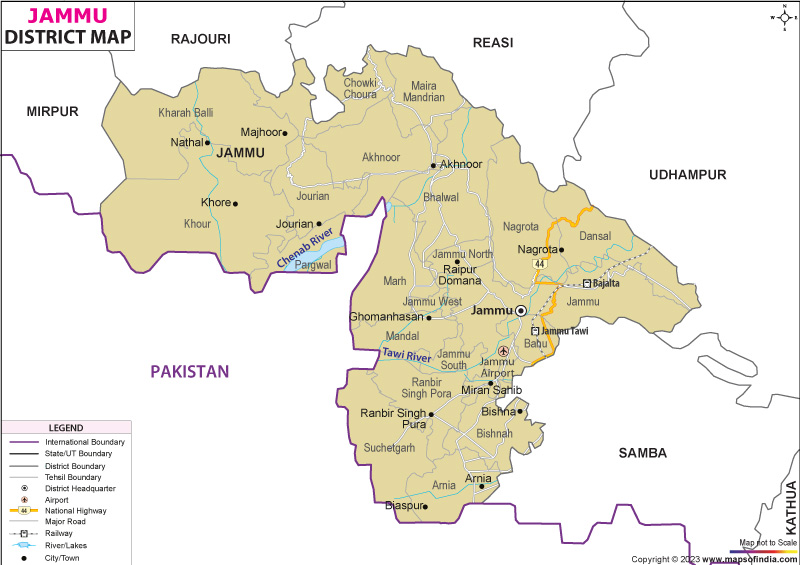
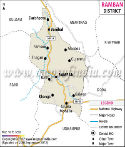
What makes Jammu stand out begins with its shifting landforms matching the rhythm of cultural variety. Located in northern India, it stretches across rich farmlands of Punjab up to the high peaks of the Himalayas - forming a space that belongs to neither zone fully. Rivers such as Tawi, Chenab, and Ravi move slowly through lower zones in the south, feeding fields while securing supply lines for settlements nearby. As elevation gains ground toward the north, rolling slopes appear before meeting the jagged edges of the Pir Panjal chain, where deep hollows sit between steep climbs.
Higher up, temperatures drop - summers stay mild where mountain slopes rise. In lowland areas, heat dominates during long stretches of summer. Where land flattens, farming spreads widely; elevation brings grazing instead. Because terrain shifts so much, human activity follows different paths across zones. Pine woods appear first, then oaks take hold, later giving way to towering deodars. These trees define green layers that shift with height. Positioned between major northern regions, movement through this area has always held importance. Routes pass here - not by accident, but due to placement on the map. Scenery captures attention, yes - but daily life ties closely to these physical traits. Economic habits grow from soil types, slope angles, and weather rhythms. Cultural forms reflect what the land allows, supports, limits. History unfolded within these quiet boundaries more than distant forces might suggest. Influence runs deeper than views alone can show.
| Facts of Jammu District | |
|---|---|
| Official name | Union territory of Jammu and Kashmir |
| Population | 738250 |
| Area | 240 km sq. |
| Language | Dogri |
| Food | Rajma Chawal, Rogan Josh, Dum Aloo, Kalaadi, Patisa and Phaerni. |
| Major Places | Vaishno Devi Temple, Raghunath Temple, Bahu Fort, Mubarak Mandi Palace, Amar Mahal Palace, Ranbireshwar Temple, Shiv Khori |
FAQs
Q1: What is Jammu best known for?
A name sticks to Jammu - “City of Temples” - born from many shrines scattered across its hills. Among them stands Vaishno Devi, drawing vast numbers each year on long journeys by foot. Pilgrims arrive without pause, guided less by maps than quiet devotion.
Q2: What language appears most often in daily talk across Jammu?
Spoken mainly in its native form, Dogri holds prominence across the area. Alongside it appear Hindi, Urdu, Pahari variants - each adding depth through long-standing regional presence. Linguistic variety here emerges naturally, shaped by generations of shared living.
Q3: What are the main cultural traditions of Jammu?
Within the region, Dogra tradition shapes much of daily life. Kud dance appears often during local gatherings. Music passed through generations fills village courtyards. Lohri arrives each year under winter skies. Baisakhi follows with spring fields turning gold. Diwali lights later rise without warning. Celebration here moves quietly but never fades.
Last Updated on : May 08, 2026
