






About
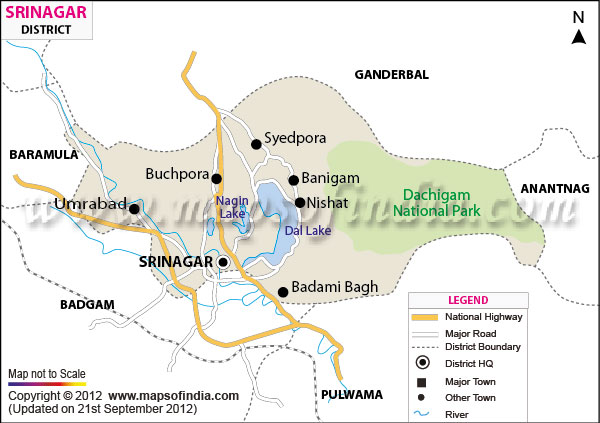
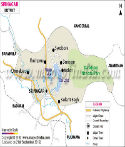
Start in Srinagar if you want to feel what gives the Kashmir Valley its heartbeat. Lying along the Jhelum River, a key branch of the Indus, this place holds more than just geography - it carries weight in spirit, rule, and art across Jammu & Kashmir. Though small on maps, it stands tall in memory, having long served as the warm-weather seat of power here. Srinagar carries weight in old stories, shaped by words from long ago written in Sanskrit. Some say it began one way, others claim a different path - one version speaks of abundance, another ties it to a revered sage . Home to riches. Splitting the name gives Sri - linked to wealth, sometimes seen as Lakshmi, fortune's presence - and Nagar, which points to a place, a town. Put together, it paints the area as a hub where abundance lives. Wealth settles here, they say. A destination built on plenty. Out here, old stories link Sri to Surya - the Sun God - calling it the "City of the Sun." To the southern rim, you’ll find Pulwama watching closely. East brings sharp terrain - Anantnag and Kargil carve their presence through steep mountain backs. Up high it rests, Srinagar perched at about 1,585 meters - or roughly 5,200 feet - above the sea.
History & Culture
Long ago, people built a place called Srinagari where now we find Pandrethan. Through centuries, this spot slowly took shape on old maps. When Buddhist thought spread widely here, minds gathered like bees to flowers. Wisdom flowed through courtyards once quiet under pine trees. Later, around the 500s CE, the city moved again when King Pravarasena II chose a new spot near waterways - set up for commerce and defense. Water paths shaped daily life there as time passed. Rulers came after him. Each left quiet marks on how people built, thought, and painted. Art changed slowly under their watch. Power shifted without loud fanfare. Design choices reflected distant courts yet stayed rooted in local soil. Monumental temples rose under the Hindu dynasties, shaping what now forms the heart of Kashmir’s historic structures. Stone by stone, their architectural choices took root, still visible in today’s landmarks across the region. Back then, during the 1300s, Islam began to settle in, bringing along graceful wood-built structures. Stone walls went up around Hariparbat under Akbar's watch, years after that beginning. By the time of Jahangir and Shah Jahan, elegant gardens by the water had taken shape, quietly becoming known far beyond the region. Beauty grew slowly beside lakes, one terrace at a time. Though shaped by Islam, everyday rhythms breathe with old village beliefs too - thanks to Sufi thought threading through routines.
Economy
Handicrafts shape much of Srinagar’s work life, along with government jobs that keep offices busy downtown. Mountains surround the city, so factories never took root here - instead, small workshops thrive. Tourism pulses through hotels and houseboats, bringing steady movement even in colder months. Work leans toward skilled making, paperwork, service - not machines or smokestacks.
Government Sector
Right where the administration settles, jobs follow. Srinagar holds offices that run the region - paperwork flows here daily. Civil servants report to buildings scattered across town, courts handle cases block after block. For countless households, a paycheck comes stamped by government letters. Schools hire teachers, engineers fix pipes under city roads, clerks sort files morning through dusk. Armed forces add steady movement too - soldiers cycle through posts on the edge of hills. Their needs feed markets, repair shops, housing lanes nearby. Money moves quietly but constantly because of these roles layered beneath routine life.
Public Sector
Heavy industry stays limited to protect the valley’s delicate environment. Instead, government-backed groups shape economic growth. Take the Jammu & Kashmir Industries - they run plants turning fine silk, wool, and pashmina into thread. That institution anchors lending, small loans, and everyday finance across the area.
Services Sector
Out here, money mostly moves through service jobs - tourism leads, handicrafts follow, trade keeps pace. Houseboats dot the lakes, each one part of a wider web that includes shikaras, big hotels, travel planners, drivers. Jobs grow around visitors who come for culture, scenery, buy woven goods, eat local food. Every stay ties into boats, guides, stays, rides - all linked without needing to show it. Soft fibers come from high-altitude goats, carefully combed by hand. Each thread is woven slowly on old-style looms, one at a time.
Tourism
Waterways here sit quietly beneath old stone bridges, pulling visitors without saying a word. Down narrow slopes, old gardens built long ago under imperial care reveal themselves gradually. Stone temples stay fixed where they were placed, every wall a keeper of deep memory. Visitors come less to see things than to walk quiet paths soaked in what once was. Winter drapes white hush over house tops, while blossoms push through soil when warmer days return. The pulse stays calm, even when crowds grow. This place does not shout; it whispers across lakes and alleyways. Water shapes life at Dal Lake in Srinagar. Instead of hotels, people sleep on old-fashioned wooden boats built like country mansions. Gliding across the surface in a Shikara- long, slender rowboat - opens up views of gardens that float. Among them, patches of market rafts sell greens straight from the lakebed. Lotus blooms spread wide during certain seasons, covering parts between drifting landmasses called Rad. Nearby, Nigeen Lake stays hushed compared to its busier neighbor. Stillness wraps around anyone sitting by its edges, watching ripples fade into silence. Over by Dal Lake, royal Mughal families shaped step-like gardens meant for leisure. Shalimar Bagh, known as the Abode of Love, unfolds with stone seating areas, tiered platforms made of rock, plus streams that tumble down slopes - all tucked under huge Chinar trees aged many hundreds of years. Then there is Nishat Bagh - the Garden of Joy - laid out much the same way but breathing its own air. Not far off sits Chashme Shahi, where a fresh spring bubbles straight from the earth, long praised because it tastes sharp and clean, thought to help healing.
Demographics
Most people in Srinagar live in cities, shaping its distinct character when seen beside other areas. Culture here follows a shared pattern, passed through generations without sharp shifts. Learning matters more in daily life than in many nearby regions. Though part of the same land, it stands apart in how lives unfold. One out of every eight people lived in Srinagar city back in 2011, counting exactly 1,219,516 residents. Its wider urban zone reached just beyond 1.2 million, totaling 1,236,829 souls. Learning to read and write came easier here than anywhere else - close to 71% managed it, though India overall stood a bit higher at 74.04%. Kids made up nearly a tenth plus two more points across both areas, landing near 12% altogether. More men walked around than women, tipping the scales at 53%, while female presence held steady at 47%. Despite differences, patterns stayed oddly similar between core city and its sprawling edges. Eight hundred eighty-eight females live for every thousand males in the city proper. In contrast, the wider urban zone shows a drop - just eight hundred eighty women per thousand men. Across India, that number climbs to nine hundred forty. Most people in Srinagar follow Islam - ninety-five out of each hundred residents. After them come Hindus, making up four percent. Others - Sikhs, Buddhists, Jains - together fill the last one percent. Most people speak Kashmiri first - that is 94.14 percent. Official work happens through Urdu, along with English in government, schools, companies, and newsrooms. In cities, you find pockets using Hindi, about 3.01 percent, because old movement patterns shaped those spaces. Trade paths helped too. Some use Punjabi, making up 0.84 percent. Hillside areas host smaller groups who talk Gojri or Shina.
Administration
Headed by a District Magistrate, Srinagar handles the day-to-day work of governing the Kashmir Division. Though state operations run through this office, city matters like roads, water, and building rules fall under the Srinagar Municipal Corporation. While one body oversees law and order, another shapes how the town grows. Now split into seven parts, Srinagar district handles crowded city life through updated management rules. Each section, called a tehsil, works separately under this new setup. One comes after another - Hudroo, followed by Eidgah, then Central Srinagar stepping in next. After that, Nawakadal takes its place, while Qamarwari fills another slot quietly. Moving along, Khanyar holds position with little fanfare. Last stands Soura, completing the line without drawing attention. Up north in Srinagar, homes and schools fill the area. Buildings where people live sit alongside places of learning. Down south in Srinagar, business areas line the Jhelum riverbanks. While parts of the city focus elsewhere, this stretch thrives on trade. Riverfront spots host shops and daily hustle. Activity hums where water meets marketplace streets. Commerce here moves steadily, shaped by location. Deep in the heart of Shahr-e-Khaas lies Khanyar, holding together a tightly packed past. Its lanes twist through centuries without hurry. Life here moves at its own rhythm, shaped by time and tradition. Buildings stand close, whispering stories through weathered walls.
| Facts of Srinagar District | |
|---|---|
| Official Name | Srinagar |
| Location | Jammu- Kashmir |
| Area (km2) | 1979 |
| Population | 1,219,516(2011 census) |
| Language | Pahari, Hindi |
FAQs
Q1: How many villages are there in Srinagar district altogether?
There are 11 villages in Srinagar .
Q2: What is the population of Srinagar ?
Out here, Srinagar district counts 1,236,829 people living within its borders.
Q3: What is the District famous for ?
Out on the edge of quiet waters sits Srinagar District, famous for Dal Lake and its handcrafted treasures. Morning light catches wooden shikaras slipping across still surfaces like whispers. Instead of crowds, there are floating farms - patches of soil riding the lake. While most cities rush forward, here Mughal-era gardens hold their breath in symmetry. Between rows of chinar trees, paths remember royal footsteps from centuries gone. Flavors linger too: saffron, slow-cooked meats, spices passed through generations.
Last Updated on : August 06, 2026
