






About
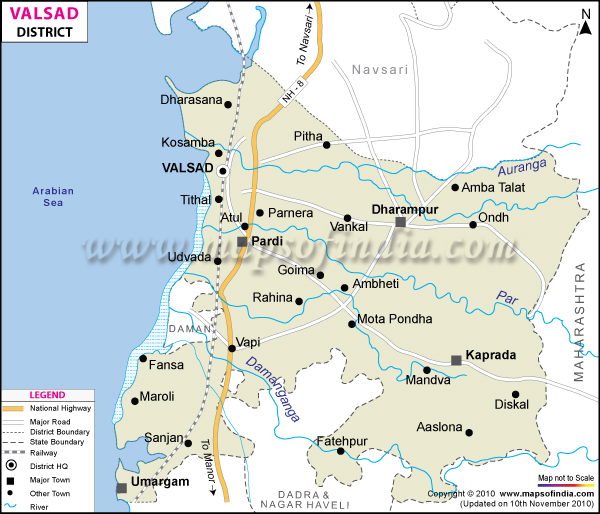
Along Gujarat’s southern coast, Valsad emerges where seafront calm blends with steady industry and long-held customs. Formerly named Bulsar, it runs beside the Arabian Sea, touching Navsari, Dang, and Maharashtra across its edges. The seat of governance rests in Valsad city, though Vapi, largest among its towns, stands notable today as a key production center across Asia. The name "Valsad" hints at surroundings shaped by nature. From the word Vad-saal in Gujarati, which points to many banyan trees, comes its origin. Green cover once defined the region; now it still does. Banyans remain across the land, silent markers of lasting presence. Through them, past blends into the present without clear division. Where growth moves forward, roots hold firm beneath. Time passes yet patterns repeat under wide canopies.
History and Culture
Valsad's past unfolds through waves of movement, habitation, and places joining. From distant lands came a group - seeking shelter - arriving on shores near what is now called Sanjan. That moment, recorded in oral memory, shaped centuries ahead. Not conquest but quiet integration followed, layer upon layer forming identity. A new chapter began when fire temples rose beside older shrines, standing without conflict. Over time, shared customs grew where once only separation existed. This part of Gujarat absorbed difference not by force, but presence.
Silence wraps around the Udvada Fire Temple like an old prayer, resting deep within the small village of Pardi taluka. Despite its unassuming shape and scale, it holds weight far beyond stone and wood for Zoroastrians everywhere. Inside, behind still air and hushed steps, a flame continues - unbroken - for centuries on end. This light does not perform; instead, it simply persists, echoing survival through belief. People come, again and again, yet never chasing wonder or showy beauty. Rooted in custom, guided by inner commitment, they step forward one at a time. What matters most is not complexity, yet persistence through time. For many scattered across distant lands, this spot carries deep meaning - Udvada stands firm, passing down memory through lives linked by origin.
Besides its natural beauty, the district holds traces of India's fight for freedom. Under Ishwarbhai Desai’s leadership, the region saw the rise of Kheda Satyagraha - a calm form of protest highlighting farmer distress and village struggles. Rather than noise, it relied on persistence; regular people resisting unfairness without stepping back. Though unseen by many, the land remembers tension - and strength - that shaped those times. Now weathered by centuries, elevated ground such as Parnera Hill carries traces of old defenses built to resist invaders.
Among the traits, depth appears most clearly in its social layers. Communities live close, shaping life through quiet coordination rather than separation. While Gujaratis form a majority, presence of Parsis, Jains, and tribal groups brings subtle shifts in daily rhythm. Their combined customs do not blend into one but stand distinct, like threads refusing to merge yet forming cloth.
Festivals arrive without rush - one after another - with Navratri marking time through step and beat. Lights appear during Diwali, small flames stretching across yards and rooftops. Color flies in sudden clouds when Holi passes through. The Parsi New Year moves differently, marked by hushed tones and careful gestures, full of restraint. These events are not performances; they anchor routine, pulling neighbors into common patterns of belief and gathering. On Parnera Hill, elevation matters less than what gathers there each year. Shrines to Chandrika Mataji and Kalika Mataji fill with visitors, voices rising in repetition. Nearby, Hanumanji and Shanker Bhagwan also hold space, each temple fed by separate streams that somehow meet.
Economy
A mixture shapes Valsad's economic life - farming appears alongside factories, while public sector work flows into service roles. Activity shifts across fields, yet each part connects without clear dominance. Where crops grow, machines also run; offices stand near villages. This balance does not favor one path. Government presence weaves through jobs, just as trade supports households. Change happens slowly, but motion exists beneath routine.
Most people find work within government roles, often in offices handling daily operations. From education to local support systems, these jobs form a steady part of community life. Located in the city, the central administration manages regional progress along with legal matters.
Oversight of such functions begins where authority is based - here, in this main urban center.
With involvement across farming and fishery work, government-linked groups appear via shared ownership models. Farmers find backing not only in collective milk operations but also in land-based associations. Along shorelines, sea-related collectives form part of regional income streams. State-run ventures emerge where community effort meets structured oversight.
Nowhere more evident than in coastal regions is the rise of service-based economies. Driven forward through visitor demand, areas rich in cultural landmarks see steady expansion. Beachfront locations attract travelers, resulting in broader support networks. Temples and historic zones contribute just as much as sandy shores do. Growth unfolds quietly within food outlets, lodging spaces, and transportation links. Expansion does not rely on one single factor but emerges where tradition meets movement.
Still, industry forms the core of Valsad’s economic activity - centered largely on Vapi. Within that zone sits an expansive industrial area, among Asia's most extensive, accommodating a broad mix of enterprises. Manufacturing here spans chemicals, fabrics, paper goods, and medicines, each supporting jobs while adding value across Gujarat. Growth has delivered wealth, though at times alongside strain on natural systems, especially regarding air and water quality oversight.
Even today, farming holds steady value beyond city limits. Known widely, Alphonso mangoes from this region move into markets throughout India and overseas. Alongside them grow paddy fields, rows of sugarcane, vegetable plots - each one feeding village economies. Where ploughs turn soil beside factory gates, it reveals layers: old ways standing near new methods.
Tourism
What stands out in Valsad’s tourism scene is its quiet hills paired with long-standing temples. Scattered across the region are sites where nature meets centuries-old stories. Beyond green slopes lie structures shaped by time and belief. Often, visitors encounter calm rivers alongside remnants of ancient rule. A sense of stillness connects each destination here. Among tree-lined paths are markers of culture now preserved. What remains visible blends terrain with tradition - neither overshadowing the other.
A visit often begins at Tithal Beach, just outside the district. Black grains underfoot set it apart from common shorelines. Devotees pause at shrines honoring Sai Baba, while others reflect near the Swaminarayan temple. Scenery draws many, though quiet moments keep them longer.
A place held in deep regard stands at Udvada - the temple housing a flame honored across Parsi communities. From distant regions, visitors arrive not merely to witness but to stand before the eternal fire, shaping its status among Gujarat’s foremost spiritual sites.
Parked above the plains, Parnera Hill carries weight in memory and worship alike. Temples here belong to Chandrika Mataji, Kalika Mataji - each standing apart yet linked by stone paths. Worship spaces for Hanumanji sit near those for Shankar Bhagwan, separated not by intent but placement. Once held firm against attack, fragments of a fortress outline where defense once stood. What remains speaks less of conquest, more of time passing through walls.
On the edge of the shore stands Sanjan, a quiet town marked by arrival. There, long ago, the Parsis stepped ashore, beginning a new chapter. Rising above the ground, the Sanjan Stambh holds memory in stone. Not merely a column, it speaks of settlement, of roots taking hold across time. Through years, it has watched silence and change alike.
Away from city noise, Bagwada Jain Temple rests beside the highway. Quiet surroundings mark its presence. Devotees of Jainism find stillness here. The site welcomes reflection without grand displays. Distance from urban rush adds to its calm nature. The district draws visitors - not only those on pilgrimage, but others seeking quiet escapes. Beaches line the coast; ancient temples stand inland. Forts rise above old trade routes, while heritage spots mark forgotten eras. Tourism thrives here, shaped by layers of history and geography alike. Local life moves in rhythm with seasonal arrivals, steady yet unassuming.
Demographics
With data drawn from the 2011 Census, Valsad district records a total population of 1,705,678. Moderately dense living patterns emerge when comparing towns such as Vapi against widespread village settlements. Education levels show roughly 80% literacy - above India’s mean - suggesting consistent investment in learning systems. Though growth appears steady, outcomes reflect long-term institutional focus rather than sudden shifts.
A count of 922 women for every thousand men points to patterns seen across several regions of India. This balance, shaped by long-term shifts, appears often in similar settings. Noteworthy is the range of languages found across the area. Official status belongs to Gujarati, which also sees the highest number of speakers. Alongside it, Hindi appears frequently, followed by Marathi and various tribal forms of speech. Among these patterns stands a smaller group - the Parsis - whose homes sometimes echo with traces of ancient Persian ways. Cultural texture deepens where such traditions continue quietly.
Within the district, people live in both towns and countryside areas. Though cities such as Vapi and Valsad show signs of development, regions including Kaprada and Dharampur remain largely untouched, shaped by indigenous lifestyles. These contrasts form part of what defines local culture here.
Administration
Underneath today's rules in Valsad district lies a system shaped by time, yet built for current demands. Five main sections - Valsad, Pardi, Kaprava, Umbergaon, and Dharampur - form the layout, each running with local character and duties. At the core stands Valsad town, where leadership gathers; government buildings here manage safety, laws, and growth plans. Industry pulses strongest in Pardi, especially around Vapi, now among Asia’s biggest production zones, drawing strong oversight just to keep pace.
Though far apart geographically, Dharampur and Kaprara share a common thread - both shaped by tribal communities whose lives revolve around village-level administration. Rural progress here depends heavily on access to social support systems, alongside efforts to sustain indigenous customs. Meanwhile, Umbergaon's shoreline position brings different demands into focus. Its management priorities lean toward sea-based livelihoods, including fishing and port-related work, while visitor activity adds another layer to local planning.
| Facts of Valsad District | |
|---|---|
| Official Name | Valsad |
| Location | Valsad |
| Area (km2) | 2947 |
| Population | 1703068 |
| Language | Gujarati, Hindi |
FAQs
Q1: In what languages do people primarily speak in Valsad?
In terms of language Gujarati is the primary one to which in different areas also add Hindi, Marathi, and a few tribal languages.
Q2: Is farming still important in Valsad?
Yes we see that agriculture is a large scale income generator which in our area includes mangoes, rice, sugarcane and vegetable production.
Q3: Which communities live in Valsad district?
People of Gujarati, Parsi, Jain, tribal, and also other communities live in this district which presents a great cultural diversity.
Q4: Which town is the primary industrial center of the district?
Vapi is the largest in terms of industry in the district which also has great impact on Gujarat’s economy.
Q5: How is the weather in Valsad?
The district has tropical weather which in summer is hot, we also have the monsoon season which is very rainy, but also we have pleasant winter which is great for travel.
Q6: Which fruit is famous in Valsad?
Valsad is known for its Alphonso mangoes which are famed for their flavour and are shipped to many parts of India and beyond.
Q7: Does Valsad have a large industry?
Yes, in the case of Vapi industries the area has become a leading manufacturing zone in the state of Gujarat.
Last Updated on : July 15, 2026
