






About
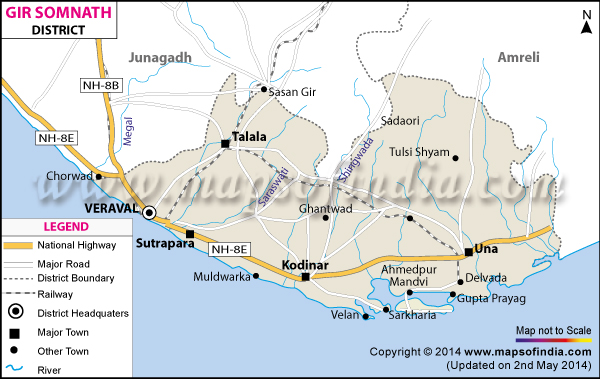
Gir Somnath came into existence back in 2013, carved out from Junagadh district in Gujarat's west. Along the Arabian Sea coast, it carries deep cultural roots and historical weight. Veraval serves as its main hub - this seaside town thrives on fishery work. Over time, separate governance helped shape fresh economic rhythms here.
Fishing lines the coast here, jobs tied to boats hauling catch into Veraval - ranked among India’s top fishing hubs. Livelihoods stretch beyond nets, reaching into factories where fish get cleaned, packed, shipped overseas. Instead of water, some fields dig roots into soil, growing groundnuts mostly, along with cotton and wheat across rural patches. Visitors arrive not just for beaches but temples with activities, plus trails edging near Gir National Park. That wild space holds Asiatic lions.
Most people here speak Gujarati, though people come from many backgrounds. Faith leans toward Hinduism, yet Muslims and Jains live side by side too. Running things falls to a District Collector, under Gujarat’s government. Local councils and village groups help carry out daily governance tasks.
History and Culture
Long ago, Gir Somnath began shaping its story through faith, markets, yet shifting powers across lands. What stands out most here is the shrine of Somnath, just one among twelve sacred spots honoring Shiva. Through ages, it fell apart many times, then rose again each time - never truly gone. One harsh blow came in 1025 when forces led by Mahmud of Ghazni struck without mercy. Rising after ruin became more than repair - it carried belief, memory, and people's voice. Once freedom arrived for India, rebuilding resumed - not quietly but boldly guided by Sardar Vallabhbhai Patel. That effort turned stone into meaning: strength remembered, unity shaped anew.
Different kings held power here - first the Mauryas, then the Guptas, followed much later by the Chudasama Rajputs. Power shifted again when Islamic leaders took influence across the area. Under British control, it became one of many small kingdoms loosely tied together. When 1947 arrived, everything changed - the land joined newly independent India. Sitting along the sea, its location helped ships come and go, bringing goods as well as new ideas.
In this place, old Gujarati ways shape daily life - faith runs deep, handed down through stories and songs. At the heart of it stands the Somnath Temple, drawing visitors who travel far just to be near its steps. When Mahashivratri comes around, streets come alive - not only with prayers but also color, sound, movement. Rituals unfold under open skies, mixed with fairground laughter and voices raised in hymns passed generations wide.
A mix of countryside and seaside life shapes this area. Along the shore, people who fish keep old customs alive, whereas inland spots hold tight to handmade goods, songs, dances like Garba and Raas. Close by, the Gir forests bring in tribal ways, where some groups still live much as their ancestors did.
A taste of this area often begins with vegetables, shaped by Gujarat’s long tradition of meatless meals. Meanwhile, near the shore, saltwater catches add a different rhythm to daily cooking.
Economy
Off the western coast, Gir Somnath thrives on farming, sea harvests, travel visitors, along with local workshops. Coastal stretch here sets the rhythm for jobs and trade, particularly in Veraval - a hub known across India for deep-sea catch. Thousands earn their daily bread from netting fish, while others find work later down the line: cleaning, sealing, shipping out. What comes from these waters reaches homes within the country, and also lands far beyond its borders.
Farming plays a key role in the local economy here. Crops like groundnuts, cotton, wheat, or bajra grow across the fields. Because water access exists through irrigation, harvests often succeed. Weather patterns also help crops thrive most years. Rural families find their main earnings come directly from these farms.
Nowhere else does faith draw crowds like here, where the Somnath Temple stands. Because of it, guesthouses fill up, drivers stay busy, shops sell more each day. Even farther out, Gir National Park pulls visitors who might have never come otherwise.
Though tiny, some businesses still shape growth in quiet ways. Think of places where people cook local foods, gather sea salt, or carve wood by hand. From villages come woven baskets, pottery, even cloth made just like it was years ago. What you see isn’t factory work - it’s hands shaping culture, one piece at a time.
Now comes better roads, upgraded fish farms, followed by fresh tourist spots shaping up across the region. Progress shows through rebuilt docks, new harbor gear, then guest areas taking form near coastal towns. Work moves ahead on ports, alongside training programs for local crews, while hotels slowly rise from old buildings. Growth arrives via transport fixes, stronger fishing methods, plus improved stays for visitors who come each season.
Tourism
Home to the famed Somnath Temple, Gir Somnath draws travelers seeking faith, sea views, and quiet coastlines. This holy shrine, honoring Shiva, stands among twelve revered Jyotirlingas - deepening its pull for pilgrims across India. Stone carvings, ocean breezes, and layers of history shape what people remember long after they leave.
Down south along the shore, Veraval stands as the district’s central hub, opening paths toward Somnath while framing sweeping sea panoramas.
Just outside the district lies Gir National Park, home to the last wild population of Asiatic lions. Wildlife lovers come here for safari trips, drawn by sightings of deer, leopards, and many kinds of birds.
Years passed, now roads reach farther into the area. Trains stop more often these days. Visitors arrive by bus, car, or rail from across India. Places to sleep have grown too - hotels stand where none did before. Guest houses opened along smaller lanes. Getting around feels simpler than it once was.
Pilgrims walk ancient paths where birds call through forest air. Spirit lives here alongside rivers that carve slow stories into stone. Visitors find meaning beyond income, though jobs do grow from steady footsteps on old ground. Tradition breathes easier when people come to see what time has shaped. This place holds weight in Gujarat’s wider story, not just as a stop, but as a pulse.
Demography
Out here in Gir Somnath, folks live in towns and scattered village clusters alike. Towns such as Veraval sit alongside many smaller settlements, home to hundreds of thousands when counted together. People pack tighter near the coast and in town hubs, while wider stretches stay more spread out. Census numbers back this patchy layout, showing how life spreads unevenly across the land.
Most folks around here speak Gujarati when they talk every day, plus it shows up in schools and government work too. People often get Hindi just fine, whereas English pops up more in paperwork and classrooms. With so many languages floating around, getting things done - like business or chatting - is easier than you’d think.
In towns, classrooms fill up each morning, yet villages still wait for equal chances. Though cities host most colleges, quiet changes grow in countryside corners.Along the shore, life often ties back to boats, nets, and markets selling sea catch. Cities hum with shop counters, office desks, and paperwork keeping systems moving.
Daily life tends to follow long-held patterns, where neighborhood bonds run deep because people share common beliefs. People stick close to familiar ways of living since trust grows through daily contact over years.
Administration
Gir Somnath came into existence in 2013, split off from Junagadh to make local management smoother. Veraval holds the role of central hub, acting as both governing base and trade heart. Though small on the map, its setup aims at sharper oversight. Administration flows from here, shaping daily operations across towns nearby.
A single officer leads the district - known as the District Collector - picked directly by Gujarat's state government. In charge of peace and daily governance, this role oversees tax systems alongside rolling out official plans and growth efforts across areas.
Out in the villages, daily management runs through gram panchayats, while towns rely on municipal setups. Water access, keeping things clean, fixing roads - these duties fall to those local groups. Voices from elections help shape decisions, making sure what people face gets noticed. How well things work often depends on who shows up and speaks up.
Keeping things secure falls to officers across Gujarat, who watch over communities while guiding daily peace. Justice moves through nearby courtrooms, sorting disagreements plus resolving offenses alike.
Nowhere else do voices matter quite like here, where leaders from this area sit in both the Gujarat Legislative Assembly and India's Parliament. Because they’re chosen by locals, these figures bring home concerns straight into debates shaping laws across two tiers of government.
Out here, progress means better roads for visitors, stronger support for fishing and farming families - yet always with care for green spaces nearby. Near Gir National Park, protecting trees and wildlife shapes how projects move forward. Schools get upgrades at the same time clinics do, because health and learning matter just as much as jobs. Even when building new things, roots stay in nature’s balance.
| Facts of Gir Somnath District | |
|---|---|
| Official Name | Gir Somnath |
| Location | Western India |
| Area (km2) | 3755 |
| Population | 1,217,477 |
FAQs
Q1: Which town is home to Gir Somnath?
Veraval is a district headquarter. Also it is one of India’s preeminent fishing ports and a key coastal town.
Q2: Which crops do we see in Gir Somnath?
Groundnuts, cotton, wheat and bajra are the main crops grown in the district. Irrigation plays a large role in that area.
Q3: Why is Veraval important?
Veraval has a very active fishing port and seafood industry. Also it is the primary access point to Somnath Temple.
Q4: Which languages are used in Gir Somnath?
In terms of language use Gujarati is the main one in the district. Hindi is very much a second language which people understand, and while English is used in the school system and for official business.
Q5: Does Gir Somnath have beaches?
Yes the district has a number of coastlines along the Arabian Sea. Also it is noted that it is a very nice area to spend a while on a visit to Somnath.
Q6: What is the economic value of fishing to the district?
Fishing is a leading source of income in Gir Somnath. From Veraval we export seafood to markets all over India and abroad.
Q7: Are there any traditional crafts in Gir Somnath?
Yes. Local artisans also produce pottery, handwoven pieces and other traditional items which are a reflection of our district’s cultural heritage.
Last Updated on : July 16, 2026
