






About
A fresh chapter began in 2007 when Tapi took shape as its own district, carved out from Surat in Gujarat's southeast corner. Flowing across the land, the river that gives the place its name also fuels farming and sustains communities. Though young on the map, its roots run alongside water that never stops giving.
Most people here live in villages where tribes like the Bhil have deep roots, shaping life across generations. Life pulses through old songs, dances, and celebrations unique to each group. This land thrives on rhythms passed down long before modern maps.
Farming holds up daily life here, where people grow rice, sugarcane, pulses, while millets take root across fields. Instead of factories, trees cover slopes and hills shape the view, setting this place apart from busier zones in Gujarat.
History and Culture
This land belonged to Surat district until 2007, covered in trees and farmland rather than cities or roads. Power never settled heavily in these parts, unlike places further north where rulers built stone halls. Still, presence matters - tribes held their ways alive across generations despite being overlooked by mainstream accounts. Their everyday choices, passed down slowly, became the unnoticed backbone of regional identity.
People have lived here for ages, part of tribes like the Bhil, Gamit, Chaudhari, Vasava. Life moved through rhythms set by old ways, shaped by kinship and seasonal cycles instead of written rules. Power once rested with village heads, elders calling decisions before bigger names took hold. Then Maratha leaders stepped in, their reach spreading across hills and valleys over time. After them came the British, bringing new forms of order none had seen before. Forests were no longer free, lines drawn where people could go, what they could take. Taxes on land changed how work felt, turning shared effort into measured dues paid to distant offices.
Once India became independent, new systems slowly took shape here - farms shifted, roads came up, schools opened. Still, life stayed rooted in old ways, shaped by indigenous communities. When the district was carved out in 2007, the goal sat clear: better oversight for a place that had long waited behind. Tradition held firm even as offices grew and plans changed.
Tribal roots shape much of how people live here, giving the place its distinct character. Though holidays like Holi, Diwali, still draw crowds, it’s the indigenous ceremonies that carry deeper meaning. Nearby happenings such as Dang Darbar ripple into everyday customs, while harvest-based events stay common across villages. When drums start beating, bodies follow - dancing woven into almost every gathering. From weddings to harvests, song fills moments that matter.
Here, people speak Gujarati - the main language - while also using local forms like Bhili and Gamit. Rooted in everyday life, these tongues carry forward long-standing customs. Stories passed by word of mouth keep memories alive, shaping how things are remembered. What gets told aloud often holds weight across generations.
Folks live close to the land, getting by on farming and gathering from forests. From sunrise they wear clothes shaped by tradition, eat meals rooted in habit, their homes built low against the weather. Craftwork shows up in baskets, beads, tools - quiet signs of identity passed hand to hand. Life stays plain because that works best where they are.
Economy
Farming shapes daily life here, most people relying on it to get by. Water flows through the land thanks to the Tapi River and its smaller streams. Rain falls more often compared to other spots across Gujarat. That extra moisture helps crops grow with less struggle.
Rice fields stretch across the land, followed by tall rows of sugarcane under open skies. Millets rise in dry patches where rain does not fall often. Pulses grow alongside them, linked through shared soil and season cycles. Oilseed plants appear here and then vanish just as fast. Many families farm only enough to feed themselves, particularly in villages far from roads. Tribal groups stick close to old ways, yet slowly welcome new tools and watering techniques. Fruit trees bloom near valleys while vegetable plots hug riverbanks in quiet corners. These gardens add income when grain markets fade.
For many tribal families, things like bamboo shoots, wild honey, and healing herbs mean daily survival. Not money from jobs, but these goods fill pockets and plates. Life keeps moving because of what the land quietly offers. Raising animals - cows, chickens, goats - also helps villages get by. Milk, eggs, and meat turn into cash when needed. It is not big business, just steady help from creatures that graze nearby.
Out here, factories and big production units don’t pop up as often as they do in busier parts of Gujarat. Instead, you’ll find smaller operations - family-run shops turning out crafts, food items, or things made by hand. Without major industrial zones taking root, jobs beyond farming stay thin on the ground. That gap pushes a number of locals to pack up, head toward places such as Surat just to land steady work.
Fresh upgrades in transport, schools, plus village programs now quietly build stronger economies. Support aimed at tribal communities and farm jobs has slowly lifted financial conditions too.
Tourism
Wandering through this corner of Gujarat feels different right away. Instead of busy cities, you find quiet villages tucked between green slopes.
Flowing right through the area, the Tapi River plays a big part in drawing tourists with its quiet beauty. Lush greenery takes over the land when rains arrive, transforming everything into rich views that pull in photographers and nature lovers alike. After heavy showers, hills wear a brighter shade of green, inviting those keen on walking trails under leafy canopies. Hidden paths wind through thick trees, offering moments away from crowds without needing long hikes.
Deep in the west, this place feels close to Dang - not just on the map but in spirit. Forests stretch across both areas, thick and green, home to communities that have lived there for generations. People drawn to roots rather than resorts tend to visit them side by side. What stands out most is the living rhythm of tribal life - festivals beating with old stories, songs passed down like heirlooms, dances tied to seasons. There are no flashy shows, no staged performances meant for cameras. Instead, moments unfold as they always have - for locals, not guests. For some travelers, that quiet truth becomes the whole reason to come.
Out here, quiet stretches between buildings make room for thought. A place called Vyara holds things together, spreading out like roots into what lies beyond. Though roads and services grow slowly, you will find rooms to stay, places to buy food, ways to move on. Simple does not mean lacking - it means space shows up in unexpected forms.
Temples hum with activity when harvest celebrations begin. Community grounds turn lively as neighbors meet year after year. These moments show customs passed quietly through time. Even small towns find their rhythm in such events. Quiet pathways lead to places full of stories spoken aloud only once in seasons.
Demographics
Around eight hundred thousand people lived there in 2011, census data shows. Since then, numbers have grown slowly - yet not enough to match crowded city areas across Gujarat. Life unfolds mostly in villages, where tribal communities form the backbone. Growth happens, just not in sudden bursts. This place breathes at its own pace, shaped by roots deeper than recent counts reveal.
Among hill slopes and quiet woodlands, lives a dense cluster of people belonging to Scheduled Tribes. Notably, families like the Bhil, Gamit, Chaudhari, and Vasava make up much of who you meet here. Away from city bustle, they stay rooted in countryside patches, holding on to old ways even as new changes drift in slowly.
Out here, most people stick to Hinduism, especially tribes that mix old customs with common Hindu ways. Elsewhere in the area, Muslim families and others live too - adding different threads to how life fits together.
Out here, folks mostly speak Gujarati - official status, sure, but it’s everywhere, like schools, offices, paperwork. Rural spots hum differently; Bhili or Gamit pop up often where village life runs deep. Younger people tend to catch Hindi well, especially if jobs take them beyond local borders.
Even though things are getting better, reading skills have long trailed behind the rest of the state, mainly because country areas lack enough schools.
Girls and boys are about even in number here, unlike places where one group clearly outnumbers the other. This balance suggests life here follows a steady rhythm over time.
Administration
A setup here handles daily running of things, built around how people actually live - mostly in villages, many from tribal communities. Run by Gujarat's state authorities, it places a Collector at the top spot without calling it power. This person keeps peace steady, manages land records and tax work, while also making sure aid plans reach those they are meant for. Oversight blends into routine tasks, mixing policy steps with on ground checks, shaped less by rules and more by local rhythm.
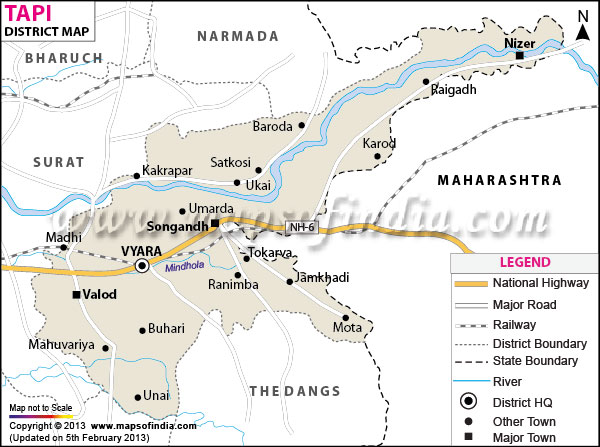
Broken into chunks for easier handling, the district includes places like Vyara, Songadh, Valod, Uchchhal, Dolvan, and Nizar. Running each of these parts is a Sub-Divisional Magistrate or Mamlatdar instead of central control. Local rule, paperwork on land, plus gathering taxes fall under their work. Because power spreads out this way, problems in far-off villages get noticed faster. Tribal regions benefit just as much when decisions happen close to home.
Down at village level, power works through local councils called Panchayats. These small groups run projects tied to clean water, toilets, paths between homes, plus help for people living in country areas. Moving up, block-level bodies link efforts across wider zones - focusing on farming needs, aid for forest communities, and stronger backcountry systems. The district layer guides planning that ties it all together, making sure work flows without gaps.
Urban administration is relatively limited, as the district has a small urban population. Vyara, the main town, is governed by a municipality responsible for civic services such as waste management, street lighting, and local infrastructure. Other smaller towns also have local administrative bodies to manage urban needs.
Peace in tribal zones gets extra focus, handled through community-based patrols led by local officers. Under the watch of the Superintendent of Police, district forces keep order while building trust with residents.
Not far off, local voices shape decisions in the Gujarat Legislative Assembly via elected seats tied to the area. Running alongside, health services work next to schools, farms, and outreach teams focused on tribal communities. Each branch steps in where needed, rolling out programs meant to pull everyone forward. Growth here leans on coordination, not grand plans, with offices spread across the region doing steady work.
| Facts of Tapi District | |
|---|---|
| Official Name | Tapi |
| Location | Western India |
| Area (km2) | 3139 |
| Population | 807,022 |
FAQs
Q1: Where is Tapi district located?
Till the year of 2007 Tapi district which is in southeast Gujarat did not exist. That year it was formed out of Surat district and Vyara was made the headquarter.
Q2: Which tribes live in Tapi district?
In our district live many tribal communities which include the Bhil, Gamit, Chaudhari, and Vasava tribes that have for generations preserved their traditional customs.
Q3: What to see in Tapi district?
Visitors to the Tapi River, green forests, tribal villages, local festivals, scenic viewpoints, and peaceful setting of Vyara.
Q4: Is Tapi district mostly rural?
Yes. In most of the area’s rural areas people live in villages and also which is very much a part of day to day life is farming.
Q5: Why do people visit Tapi district?
People go to Tapi for a taste of its natural beauty, tribal culture, quiet villages, forests, and true rural way of life.
Q6: Which forest products do we have in Tapi district?
Wild honey, bamboo, medicinal plants and other forest products is a source of income for many tribal families.
Q7: What is the best time to visit Tapi district?
Between October and February is the best time to go when the weather is at its most pleasant for sightseeing and exploring the district’s natural attractions.
Q8: Is Tapi district worth visiting?
Yes. If you are into nature, tribal cultures, green settings, and out of the way from the typical tourist spots, Tapi has what you are looking for.
Last Updated on : May 12, 2026
