




Delhi Metro Map
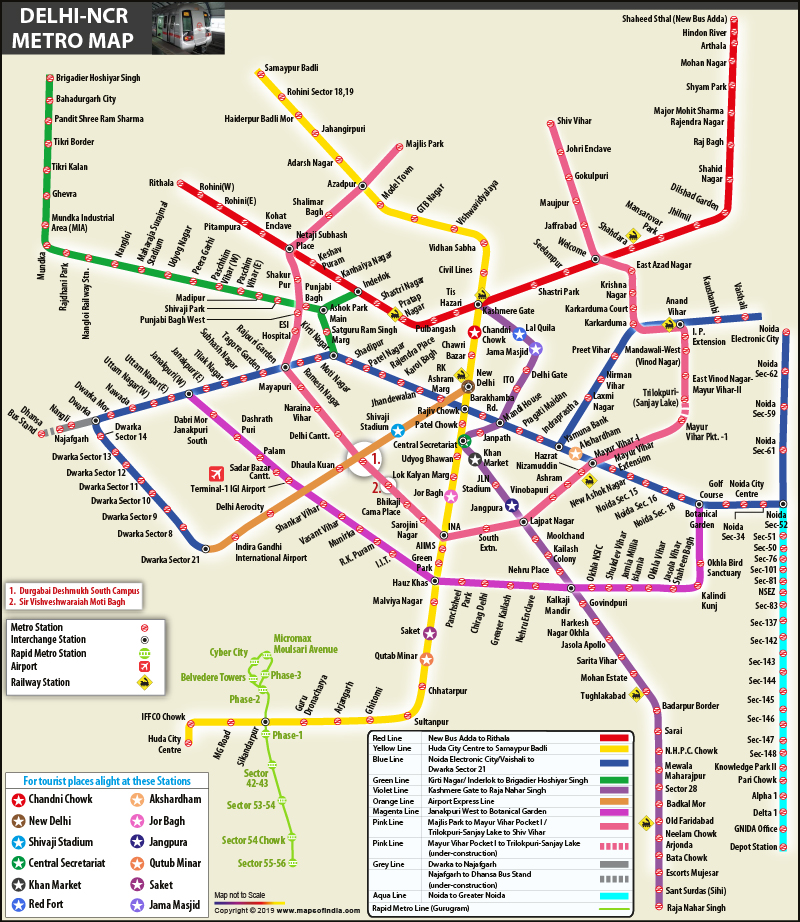
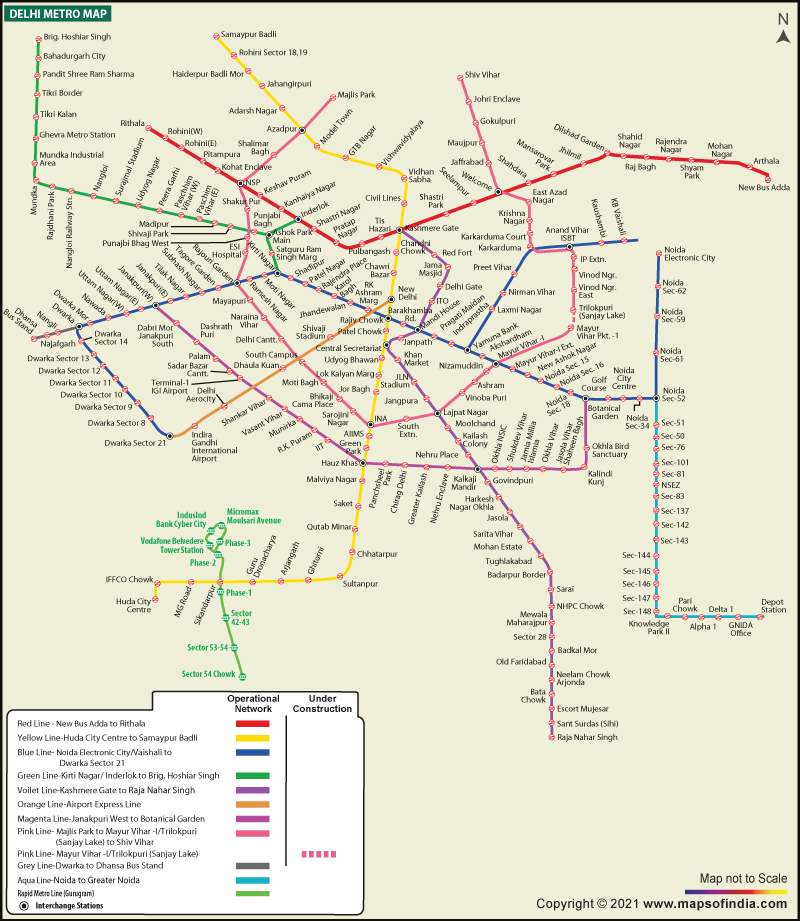
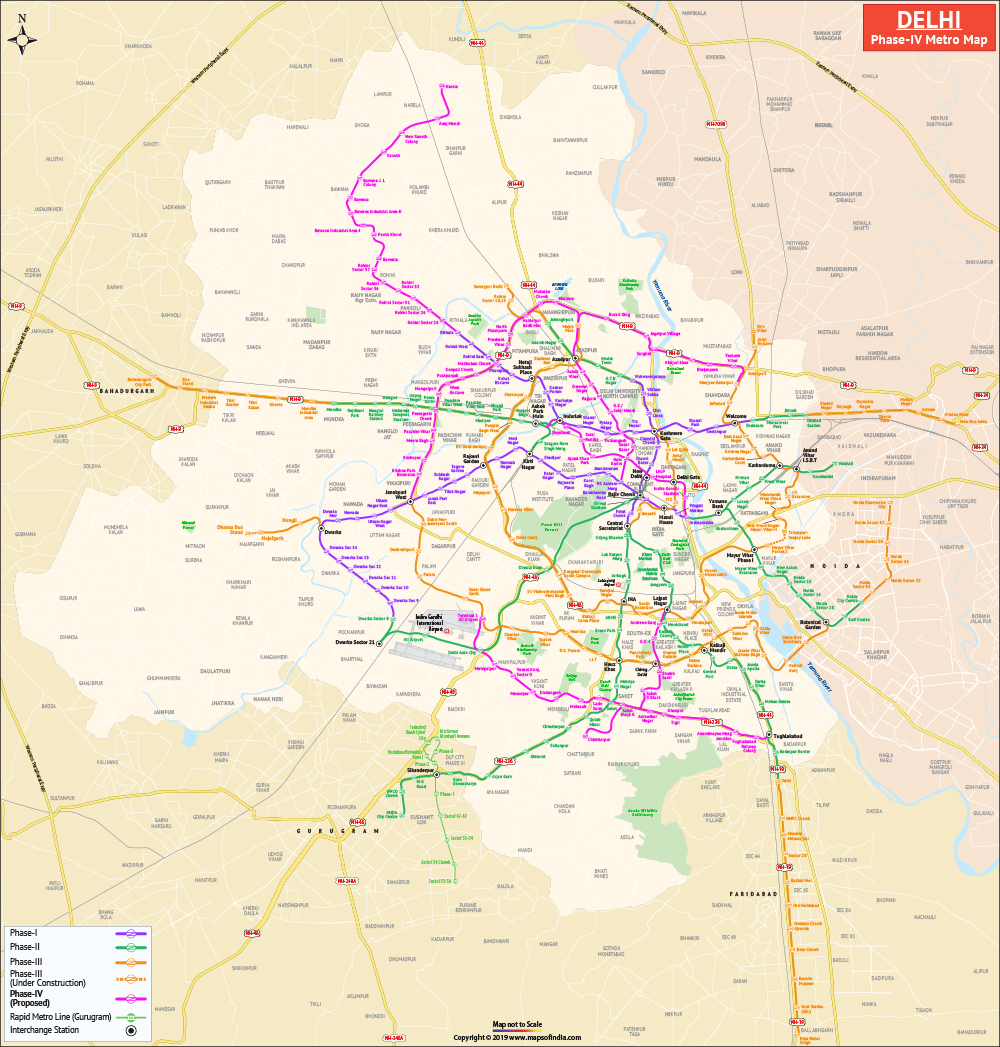
Delhi Metro Map is a comprehensive map of the Delhi Metro, which links the city with the rest of the National Capital Region (NCR). The Delhi Metro is one of the largest metros in India that provides quick and convenient travel facilities from one part of Delhi to another, along with other cities like Noida, Ghaziabad, Gurugram, Faridabad, etc. The metro map Delhi provides a detailed overview of all metro routes, stations, and connectivity options across the Delhi NCR region.
Delhi metro map enables the passengers to understand the metro lines, routes, metro stations, mutual connections, interchange points, etc., within the Delhi metro. The DMRC map can be used by anyone, be it a regular commuter, a tourist, a student or a business traveller, to make city travel easier for all. The DMRC metro map helps passengers plan their journey by showing updated routes, interchange stations, and metro line connections.
The updated Delhi Metro Map includes:
- All operational metro lines and corridors
- Complete Delhi Metro route map
- Major metro stations
- Interchange stations
- Airport metro connectivity
- Delhi NCR metro coverage
- Station-to-station route information
Delhi Metro Map with All Lines and Routes
Delhi Metro has several colour-coded lines. All metro lines are linked to significant residential zones, trading areas, railway stations, airports and tourist sites. The latest metro map Delhi includes all operational corridors, major stations, and important interchange points for easy navigation.
| Metro Line | Route | Important Interchange Stations |
|---|---|---|
| Red Line | Rithala – Shaheed Sthal (Ghaziabad) | Kashmere Gate, Welcome, Netaji Subhash Place |
| Yellow Line | Samaypur Badli – Millennium City Centre, Gurugram | Kashmere Gate, Rajiv Chowk, Central Secretariat, Hauz Khas |
| Blue Line | Dwarka Sector 21 – Noida Electronic City / Vaishali | Rajiv Chowk, Yamuna Bank, Botanical Garden, Anand Vihar |
| Green Line | Inderlok / Kirti Nagar – Brigadier Hoshiar Singh (Bahadurgarh) | Inderlok, Ashok Park Main, Punjabi Bagh West |
| Violet Line | Kashmere Gate – Raja Nahar Singh (Ballabhgarh) | Kashmere Gate, Central Secretariat, Mandi House, Lajpat Nagar |
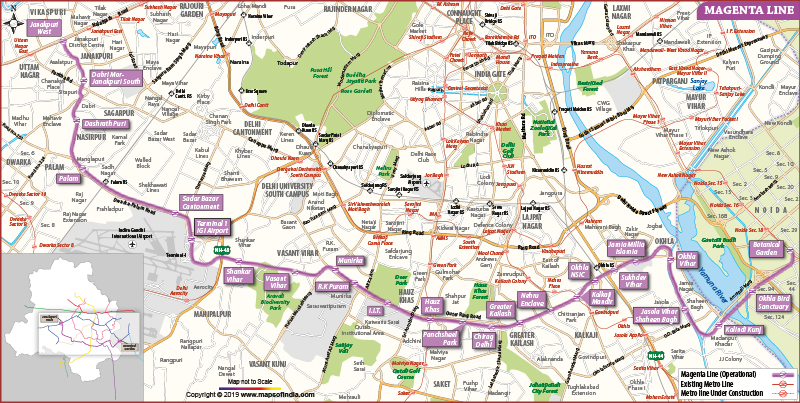
| Magenta Line | Janakpuri West – Botanical Garden | Janakpuri West, Hauz Khas, Kalkaji Mandir, Botanical Garden |
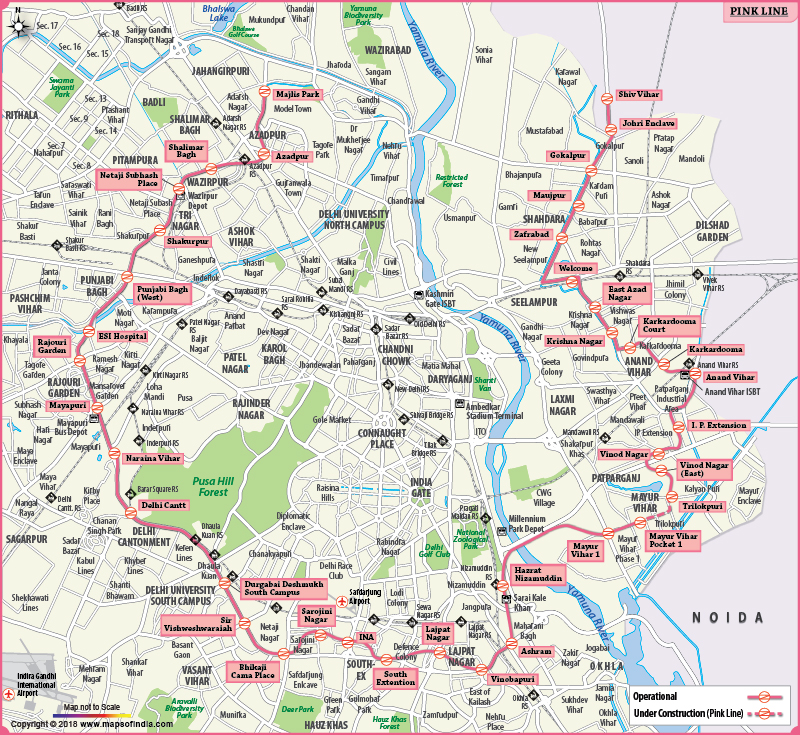
| Pink Line | Majlis Park – Shiv Vihar | Rajouri Garden, INA, Lajpat Nagar, Anand Vihar, Welcome |
| Airport Express Line (Orange Line) | New Delhi – Yashobhoomi Dwarka Sector 25 | New Delhi, Shivaji Stadium, Dhaula Kuan, Delhi Aerocity, Dwarka Sector 21 |
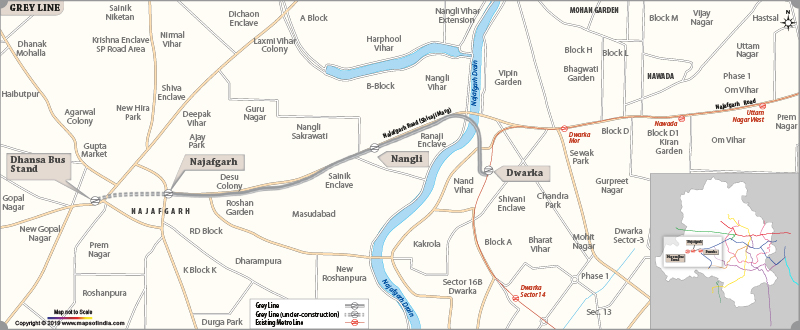
| Grey Line | Dwarka – Dhansa Bus Stand | Dwarka |
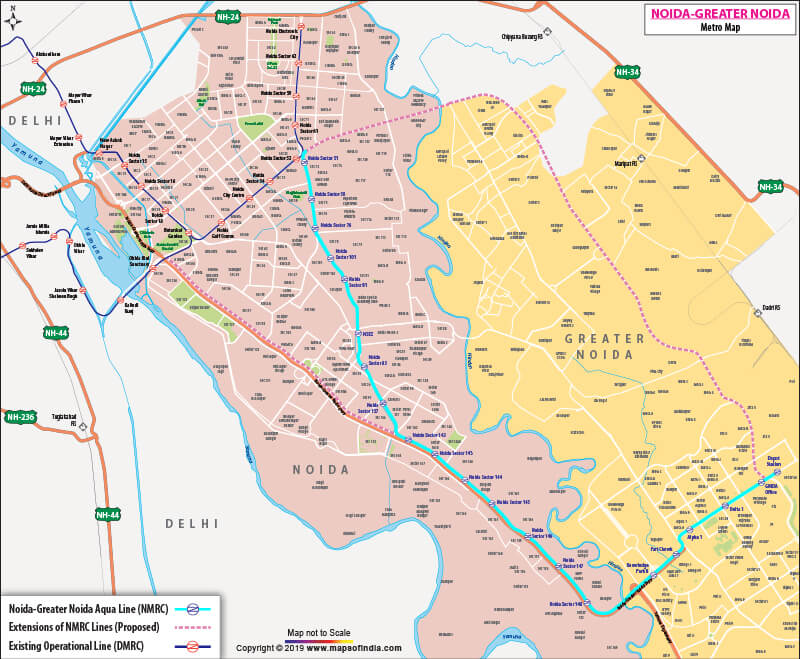
| Aqua Line | Noida Sector 51 – Depot Metro Station (Greater Noida) | Noida Sector 52 (Blue Line interchange), Noida Sector 142, Pari Chowk, Knowledge Park II |
Delhi Metro Red Line Route
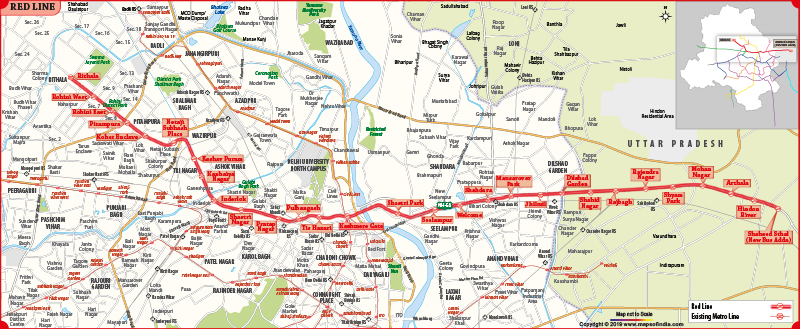
The Delhi Metro Red Line is one of the oldest metro corridors in Delhi. It connects North Delhi with Ghaziabad and provides important connectivity across the eastern and northern parts of the city.
Red Line Route Coverage
The Red Line runs between:
Shaheed Sthal (Ghaziabad) – Rithala
Major areas covered:
- Ghaziabad
- Shahdara
- Welcome
- Kashmere Gate
- Rohini
Important stations include:
- Shaheed Sthal
- Dilshad Garden
- Welcome
- Kashmere Gate
- Netaji Subhash Place
- Rithala
Major interchange points:
- Kashmere Gate – Red Line, Yellow Line, Violet Line
- Welcome – Red Line, Pink Line
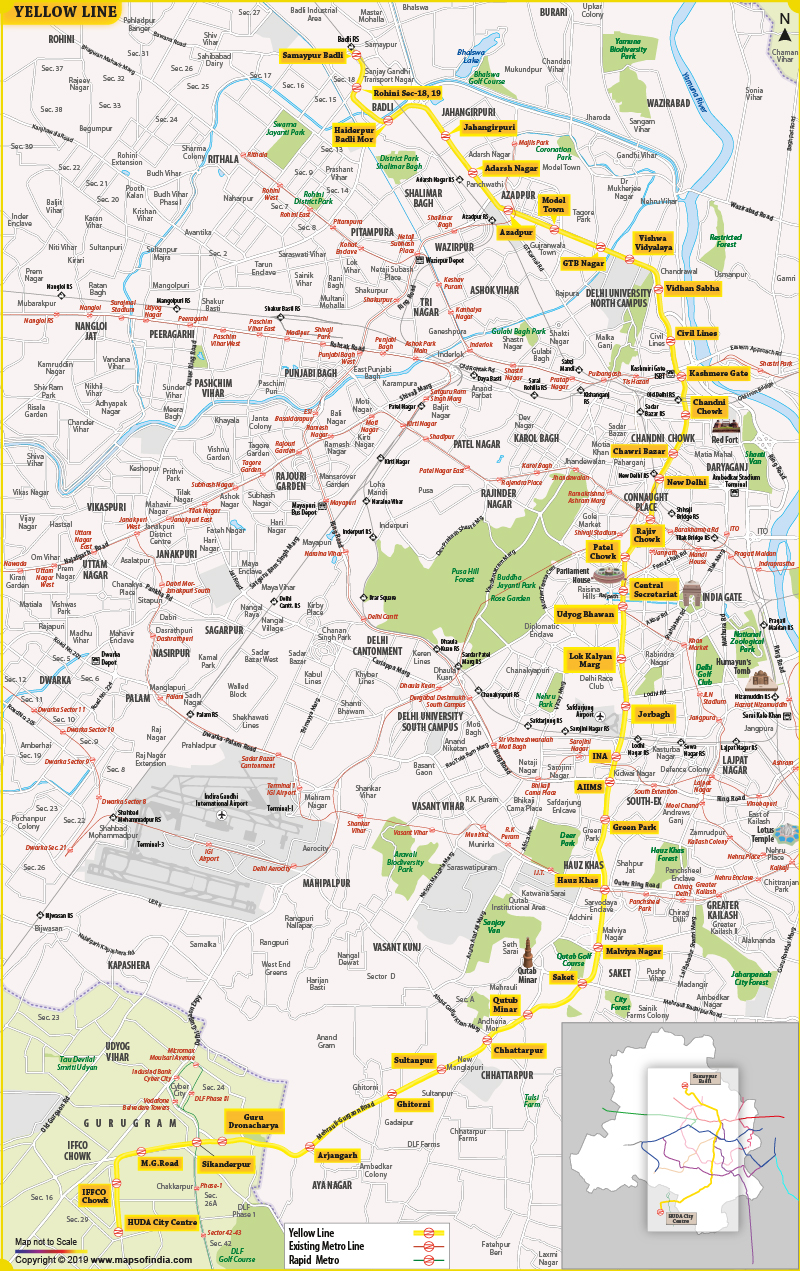
Delhi Metro Yellow Line Route
The Yellow Line Metro Route is one of the busiest metro routes in Delhi. It connects North Delhi, Central Delhi, South Delhi, and Gurugram.
Yellow Line Route Coverage
The Yellow Line connects:
Samaypur Badli – Millennium City Centre, Gurugram
It provides connectivity to:
- Delhi University
- Civil Lines
- Connaught Place
- Central Delhi
- Gurugram
Major stations:
- Samaypur Badli
- Vishwavidyalaya
- Kashmere Gate
- Chandni Chowk
- Rajiv Chowk
- Central Secretariat
- Hauz Khas
- Sikandarpur
The line is useful for reaching:
- Connaught Place
- Government offices
- Shopping areas
- Business districts
- Gurugram corporate hubs
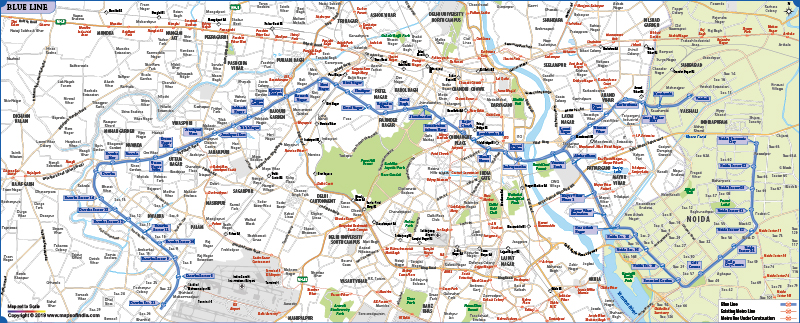
Delhi Metro Blue Line Route
The Blue Line Metro Route connects Dwarka with Noida and Ghaziabad, making it one of the longest and most important metro corridors in Delhi NCR.
Delhi–Noida–Ghaziabad Connectivity
The Blue Line connects:
- Dwarka
- Central Delhi
- East Delhi
- Noida
- Ghaziabad
Major route:
Dwarka Sector 21 – Noida Electronic City
Major Blue Line Stations
Important stations include:
- Dwarka Sector 21
- Rajiv Chowk
- Mandi House
- Yamuna Bank
- Anand Vihar
- Botanical Garden
- Noida City Centre
- Noida Electronic City
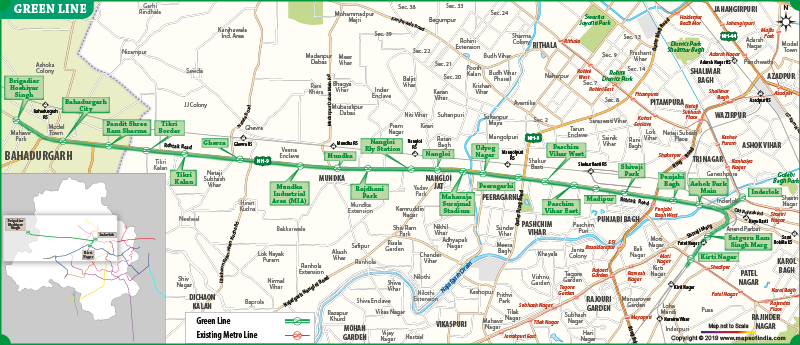
Delhi Metro Green Line Route
The Green Line Metro Route connects the western parts of Delhi with the Haryana region.
Major Routes Covered
The Green Line connects:
- Inderlok
- Punjabi Bagh
- Mundka
- Bahadurgarh
- Inderlok
- Ashok Park Main
- Mundka
- Brigadier Hoshiar Singh
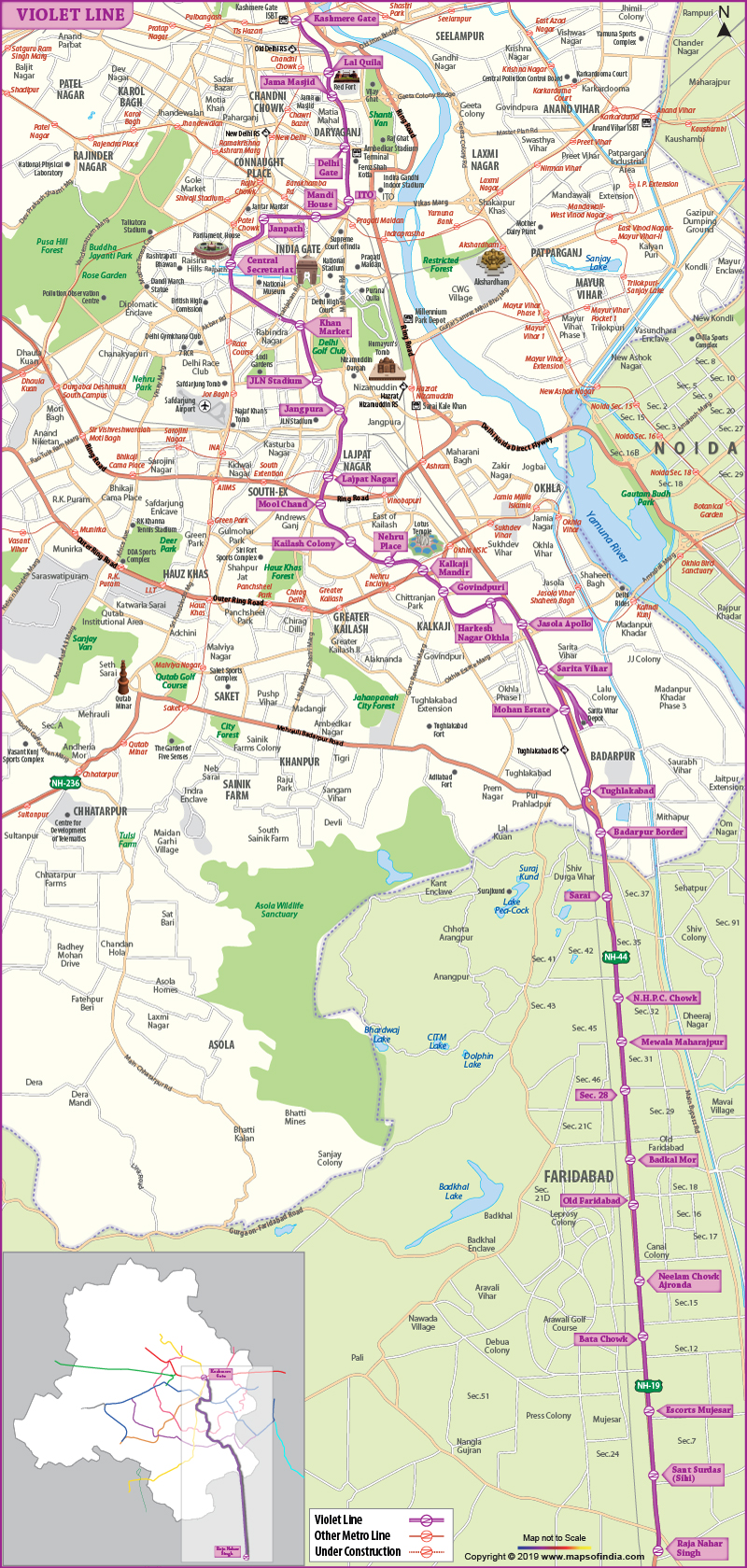
Delhi Metro Violet Line Route
The Violet Line Metro Route connects North Delhi, Central Delhi, South Delhi, and Faridabad.
Important Violet Line Stations
Major stations include:
- Kashmere Gate
- Delhi Gate
- Central Secretariat
- Lajpat Nagar
- Nehru Place
- Kalkaji Mandir
- Okhla
- Faridabad
Delhi Metro Pink Line Route
The Pink Line Metro is also known as the Ring Road Metro Line because it covers a large circular route around Delhi.
Major Pink Line Interchange Points
Important stations:
- Majlis Park
- Azadpur
- Rajouri Garden
- INA
- Lajpat Nagar
- Anand Vihar
- Welcome
Delhi Metro Magenta Line Route
The Magenta Line Metro Route provides important connectivity between West Delhi, South Delhi, Noida, and the airport.
Airport Connectivity
The Magenta Line connects:
- Janakpuri West
- Terminal 1 Airport
- Hauz Khas
- Botanical Garden
Major stations:
- Janakpuri West
- Dabri Mor
- Hauz Khas
- Okhla Bird Sanctuary
- Botanical Garden
Delhi Metro Grey Line Route
The Grey Line Metro Route provides important connectivity between Najafgarh, Dwarka, and West Delhi, improving access to residential areas and connecting passengers with the wider Delhi Metro network.
Connectivity
The Grey Line connects:
- Dwarka
- Nangli
- Najafgarh
Important Grey Line Stations
Major stations:
- Dwarka
- Nangli
- Najafgarh
Airport Express Metro/Orange Line Route
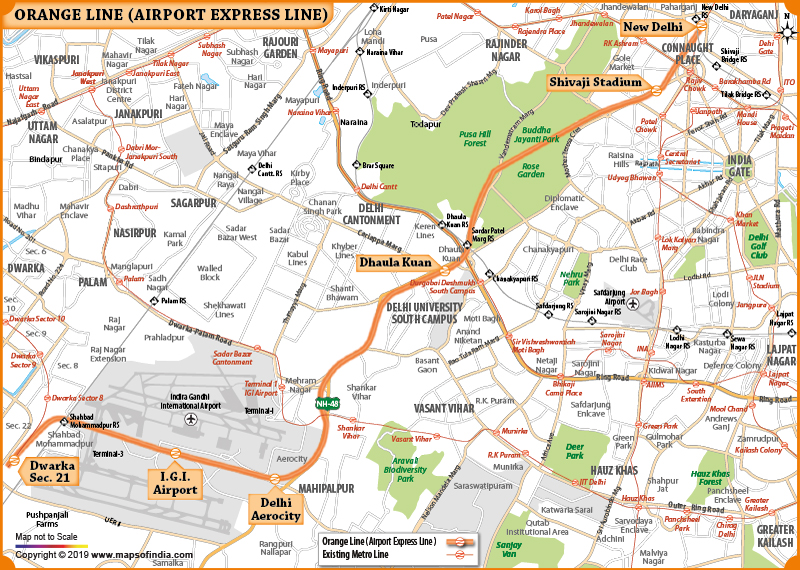
The Airport Express Metro Line provides fast connectivity between New Delhi Railway Station and Indira Gandhi International Airport.
New Delhi Railway Station to Airport Route
Route:
New Delhi – Shivaji Stadium – Dhaula Kuan – Delhi Airport – Dwarka Sector 21
Key benefits:
- Fast airport travel
- Less travel time
- Direct connectivity from the railway station
Delhi Metro Aqua Line Route
The Aqua Line Metro Route provides important connectivity between Noida and Greater Noida, improving access to residential areas, educational institutions, commercial hubs, and developing sectors of the National Capital Region (NCR). Operated by the Noida Metro Rail Corporation, the Aqua Line connects major areas of Noida with Greater Noida and links passengers with the wider Delhi Metro network.
Connectivity
The Aqua Line connects:
- Noida Sector 51
- Noida Sector 76
- Noida Sector 101
- Noida Sector 142
- Pari Chowk
- Knowledge Park II
- Depot Metro Station (Greater Noida)
Important Aqua Line Stations
Major stations:
- Noida Sector 51
- Noida Sector 52 (Blue Line Interchange)
- Noida Sector 142
- Pari Chowk
- Knowledge Park II
- Depot Metro Station
Delhi Metro Route Map and Station Connectivity
The Delhi Metro route map is used by the passengers to navigate the best route between two stations. Displays direct routes, interchange stations and metro lines connected to it. The updated DMRC metro map allows commuters to check station connectivity and select the fastest travel route across Delhi NCR.
How to Find the Delhi Metro Route Between Two Stations
To find a metro route in Delhi:
- Select your starting station.
- Select your destination station.
- Check direct metro availability.
- Identify interchange stations if required.
- Plan your journey according to the route.
Major Delhi Metro Interchange Stations
| Metro Station | Connected Metro Lines |
|---|---|
| Rajiv Chowk | Blue Line, Yellow Line |
| Kashmere Gate | Red Line, Yellow Line, Violet Line |
| Hauz Khas | Yellow Line, Magenta Line |
| Botanical Garden | Blue Line, Magenta Line |
| Mandi House | Blue Line, Violet Line |
| Anand Vihar | Blue Line, Pink Line |
Delhi Metro Stations List with Major Locations
The Delhi Metro has a wide network of stations connecting important areas across the Delhi NCR.
Important Metro Stations in Delhi
Rajiv Chowk Metro Station
Located in Connaught Place, Rajiv Chowk is one of the busiest metro stations and a major interchange between the Blue and Yellow Lines.
New Delhi Metro Station
New Delhi Metro Station provides connectivity with:
- New Delhi Railway Station
- Airport Express Line
- Central Delhi areas
Kashmere Gate is one of the biggest interchange stations connecting:
- Red Line
- Yellow Line
- Violet Line
It connects important government areas and provides interchange facilities between the Yellow and Violet Lines.
Hauz Khas Metro Station
A major interchange station connecting the Yellow and Magenta Lines.
Anand Vihar Metro Station
Provides connectivity to East Delhi and nearby NCR regions.
Noida City Centre Metro Station
A major Blue Line station serving Noida commuters.
Delhi Metro Stations Near Popular Places
Delhi Metro provides easy access to major attractions and transport hubs.
Metro Stations Near Popular Locations
| Location | Nearest Metro Station |
|---|---|
| Connaught Place | Rajiv Chowk |
| India Gate | Central Secretariat |
| Delhi Airport | Airport Express / Terminal 1 |
| New Delhi Railway Station | New Delhi Metro Station |
| Chandni Chowk | Chandni Chowk Metro Station |
Delhi Metro Rail Corporation (DMRC) Information
The Delhi Metro Rail Corporation (DMRC) manages and operates the Delhi Metro network. It provides reliable and affordable public transportation across Delhi NCR.
DMRC connects major regions including:
- Delhi
- Noida
- Ghaziabad
- Gurugram
- Faridabad
- Bahadurgarh
Delhi Metro Network Overview
The Delhi Metro network includes:
- Multiple operational metro lines
- Extensive station coverage
- Delhi NCR connectivity
- Airport and railway station links
Major metro corridors include:
- Dwarka–Noida Corridor
- Delhi–Gurugram Corridor
- Delhi–Faridabad Corridor
- Airport Metro Corridor
Delhi Metro Timings and Frequency
First and Last Metro Train Timings
Delhi Metro services generally begin early in the morning, around 5 AM, and continue until late at night, around 11:30 PM. Timings may vary depending on:
- Metro line
- Station
- Route distance
Delhi Metro Frequency During Peak Hours
During peak hours, metro trains operate frequently to handle high passenger demand.
Busy routes include:
- Blue Line
- Yellow Line
- Pink Line
Delhi Metro Fare and Ticket Information
Delhi Metro fare depends on:
- Travel distance
- Destination station
- Number of stations travelled
Delhi Metro Ticket Options
Token
A single journey ticket suitable for occasional passengers.
Smart Card
A convenient option for regular commuters with faster entry and exit.
QR Tickets
Digital ticketing option for quick and contactless travel.
How Delhi Metro Fare is Calculated?
- Delhi Metro fare is calculated according to the distance between the starting and destination stations.
- Short-distance journeys have lower fares, while longer routes covering multiple stations cost more.
- Passengers can check the fare before travelling and choose the most suitable ticket option.
FAQs
Q1: What is the timing of Delhi Metro?
The timing of Delhi Metro is 5:00 AM to 11:30 PM.
Q2: Which is the busiest metro station in Delhi?
Rajiv Chowk and Kashmere Gate are among the busiest metro stations in Delhi.
Q3: How many metro lines are there in Delhi?
Delhi Metro has 10 main colour-coded lines, including the Airport Express Line under the Delhi Metro network.
Q4: Which metro line connects Delhi to Noida?
The Blue Line provides major connectivity between Delhi and Noida.
Q5: Which metro line goes to Delhi Airport?
Airport Express Line and the Magenta Line provide airport connectivity.
Q6: Which Delhi Metro line is the longest?
The Pink Line is among the longest corridors in the Delhi Metro network.
Q7: What is the biggest interchange station in Delhi Metro?
Rajiv Chowk and Kashmere Gate are major interchange stations.
Q8: Which is the biggest metro station in Delhi?
Rajiv Chowk Metro Station is generally considered the biggest and one of the busiest metro stations in Delhi. It is a major interchange station connecting the Yellow Line and Blue Line of the Delhi Metro network.
Last Updated on: July 23, 2026
Metro Rails in Indian Cities