

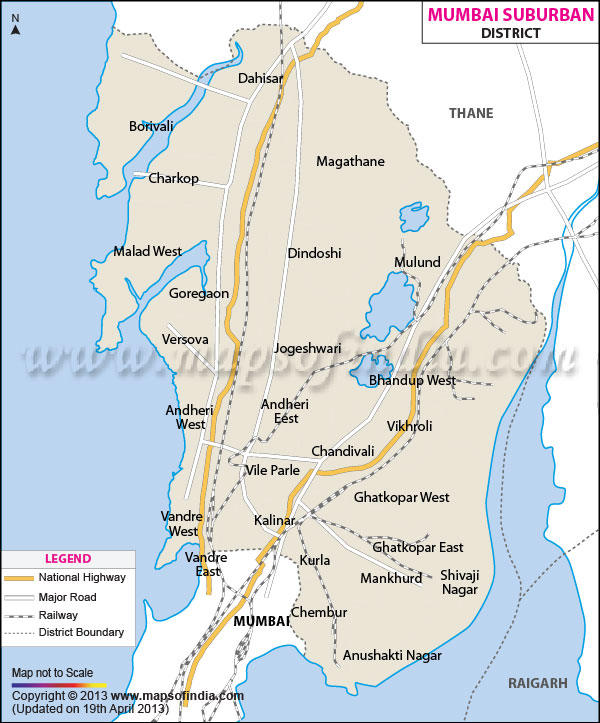





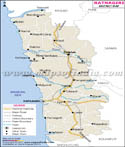
Suburban is a very important district in the Indian state of Maharashtra. It makes up a large part of Mumbai and includes many of the city’s residential, commercial and business areas. The district is located between Mumbai City District and the also nearby Thane and Palghar.
Suburban District is a key player in the city’s daily life. It is home to millions and also is a main center for job, education, business and entertainment. The district includes what are by now very well known localities like Andheri, Bandra, Borivali, Goregaon, Malad, Kandivali, Kurla, Mulund, Powai, Santa Cruz, and Vile Parle. Over the years these areas have grown into important residential and commercial points which in turn have drawn people from all over the country.
Spread out over an area of about 446 square kilometres the Suburban District is one of the most dense areas in India. In terms of geography it is small but it is home to a large population which it supports very well through its best transport network. We have roads, suburban rail lines, metro services, and the nearby airport which together make it easy for people to get around the district. This well connected infrastructure has been key in the district’s growth and also supports what you may call a fast paced way of life in Mumbai.
Suburban District is a home to modern infrastructure, shopping centers, educational institutions and business parks. Also it is a base for people from all over India which we attribute to the job options and to a higher quality of life.
Today in the case of Suburban District it is a very active and developed part of Maharashtra. It has a strong economy, modern infrastructure and strategic location which in turn makes it an important district in the state.
History and Culture
Suburban District’s past is in fact the story of the growth of Mumbai. What we today see as the district’s areas were former villages, fisherman’s settlements and agricultural lands. Through time what we see today is that those villages transformed into what we have today very active residential and commercial centers.
During the time of colonization railways played a key role in the growth of Suburban District. The rail network connected remote areas to the main city and also prompted people to move out of the old city limits. As industries and businesses grew more people shifted to the suburbs.
After India’s independence Suburban District saw great growth. We saw the appearance of new housing colonies, schools, hospitals and commercial complexes in the area. Also areas like Bandra and Andheri became important for business and residence.
In Suburban District culture you see a mix of what is present in the city as a whole. People from various states, religions and communities live here. Marathi, Hindi, English, Gujarati and also many other languages are spoken.
The district sees the celebration of many of its festivals throughout the year. During Ganesh Chaturthi we see the largest turn out which is a very big festival. Also we celebrate Diwali, Holi, Eid, Christmas, Navratri and Gudi Padwa which are other main festivals.
Suburban District is also a home to the Indian film and TV industry. In that district you will find many actors, directors and media professionals. What we see is that the film studios and entertainment companies have played a large role in forming the area’s culture.
The district has a very diverse food culture. We have traditional Maharashtrian foods as well as dishes from all over India and the world. Also street food is a great hit with the local as well as the tourist crowd.
Economy
Suburban District reports as one of the best economies in the state of Maharashtra. It is home to a great diversity of economic activities which include finance, IT, retail trade, real estate, education, healthcare, media and tourism. In the past years major business centers have contributed to Suburban District which in turn has become a key element to the state’s economy. The district is a target for investment from within and outside India.
Government Sector
In Suburban District the government sector plays a very important role. We see various government offices which provide for the employment and public service needs of residents.
In Suburban District government schools, colleges, hospitals, police forces and administrative offices are home to a large work force. Also public welfare programs, urban development projects and improved transport add to the economy.
The government is putting forth resources into roads, metro rail projects, housing schemes and public infrastructure. In Suburban District these projects create jobs and support long term growth.
Public Sector
In Suburban District the public sector is very large. We have public sector banks, transport services, power distribution companies and communication services which are wide spread throughout the district.
In Suburban District many public sector companies have a presence which they run as base for stable employment. Banks support business growth, home buying and small enterprise initiatives.
Public transportation in the form of suburban rail and bus systems which connect various areas of the district. Also these services play a role in economic growth by daily movement of millions of commuters.
Public infrastructure has been put in place which has improved connection and fuelled growth in the Suburban District.
Services Sector
In Suburban District the services sector is the main contributor. Information technology, finance, media, education, healthcare and retail make up this sector.
Suburban District is home to many corporate offices and commercial centers. In Bandra-Kurla Complex, Andheri and Powai we see large scale business development.
In the IT sector there are large scale employment opportunities. In Suburban District many multi national companies have a presence. Healthcare facilities have seen great growth. In the district there are many hospitals, clinics and health centers which serve residents of Mumbai and outlying areas.
Retail trade is also a very large component of our economy. Shopping malls, local markets and commercial centers see to it that there is constant customer flow throughout the year.
The hospitality sector is a pillar of economic growth. Hotels, restaurants and entertainment venues which cater to tourists from all over India and the world.
Tourism
In Suburban District tourism plays a key role. The district which also is a tourist destination has beaches, parks, historical sites, religious places and entertainment attractions.
Juhu Beach is a favourite with visitors which is what made it to be a top attraction. Here they come to enjoy the sea views, evening walks and also to try the popular street food. In the Suburban District this beach is a primary destination.
Another popular attraction is Aksa Beach which is a more quiet place as compared to some other beaches in Mumbai. Sanjay Gandhi National Park is a large scale urban national park. There it is a place which has wide range of natural experience, wildlife view, and outdoor action.
Powai Lake is a favourite with residents and tourists all through the year. It is a top spot for relaxation and photography. In Suburban District religious tourism is a key element. Temples, churches, mosques and gurudwaras welcome visitors from various communities.
The entertainment industry also has a great deal to offer in terms of attraction. In the Suburban District film studios and media centers have made it a very interesting destination for cinema and TV enthusiasts.
Demographics
Suburban is the most populated district in India. In the 2011 Census it was reported that the district has a population of over 9.3 million. In Suburban District people have been moving in from all over India in search of work, better education and business opportunities.
The district reports a high literacy rate which is a feature that many other parts of the country do not have. Education institutions have been the base for which we see this improvement in literacy and skill development.
Marathi is the primary language which is very much in use in Suburban District. Also Hindi and English play a large role in business, education and day to day communication. In the district also you will see other regional languages because of the mixed population.
Housing in the area ranges from new high rise apartments to traditional residential areas. In terms of the people which have settled in the districts we see a change.
Administration
Suburban District is administered by the District Collector and also other government departments which are into governance and public services. The district is broken down into admin units which seek effective local governance. Various departments in charge of education, health care, law enforcement, transport, and development have been created.
The local government works very closely with municipal authorities in the maintenance of public infrastructure and delivery of basic services. In terms of policy we see the development of roads, public transport, housing and environmental protection as main issues that admin deals with. Suburban District also a beneficiary of excellent urban administration which is a result of its location within the Mumbai Metropolitan Region. These systems put in place for better urban planning, disaster management and public service delivery.
The administration is putting out effort to improve infrastructure, transportation and public facilities which is to address the issue of growth in population.
| Official Name | Suburban |
| Location | Mumbai, Maharashtra |
| Area | 446 sq. km |
| Population | 9,356,962 (Census 2011) |
| Language | Marathi, Hindi, English |
FAQs
Q1: Where is Suburban District located?
Suburban is in the western part of Maharashtra which also has large parts of Mumbai city.
Q2: What does Suburban District have to offer?
Suburban District that has large residential areas, business centers, beaches, educational institutions, film industry players and also modern infrastructure.
Q3: In which languages do we see the most in Suburban District?
Marathi and Hindi as well do very well in the Suburban District which also has large number of speakers of many other Indian languages.
Last Updated on : August 21, 2026
