




Introduction
Raebareli is a well known district in the north of India. It is located in the Awadh region. Many people know of it for its association with great political leaders. Also it is a land which has a rich history, a great prospect in industry, and a very warm community. As you walk the streets of Raebareli you will see a mix of old brick homes and new modern structures. This is a display of progress which also respects the district's past.
History
The history of Raebareli is a large and varied tale that goes back many thousands of years. In very ancient times this land was part of the great Kosala Kingdom which is brought up in sacred texts. Also it is believed that the town was founded by a bold tribe which are the Bhars. They were the first rulers which built a strong mud fort to protect their people from enemies.
Due to these early rulers the city was named as Rai Bareli. The term “Rai” is from the title which the Bhar kings used. Over time the name changed a little to become what we today know as Raebareli. After the Bhars many others took over the region which included the Sultans of Jaunpur and in the end the great Mughal Emperors who ruled from Delhi.
During the time of Emperor Akbar, Raebareli was a base from which to manage the outlying villages. The Mughals put up beautiful brick structures and also improved the local markets. To this day you can see the old ruins and stone carvings in the narrow streets of the city which bring to mind those grand old days. The city has been a place where different cultures met and lived together.
In the 1800s the history of Raebareli saw a very bold turn. When the British came to take over the land the locals did not take it laying down. In the 1857 revolt many local landlords and farmers fought with great valor. At the Munshiganj Bridge which is a famous spot a large group of farmers rose up against unfair laws. This is very much a source of local pride.
After Independence Raebareli got a new kind of notoriety. It became home to many of India’s preeminent leaders which included Indira Gandhi. This political connection saw the district transform from a small farming town into an industrial center. We saw the rise of giant industries like ITI and the Modern Coach Factory which in turn transformed the lives of thousands of local families forever.
The story of Raebareli is beyond that of great kings and political leaders; it is that of its people’s strength. From the ancient Bhar kings to present day factory workers each generation has brought to the city what it had to. Today it is a city which preserves its past traditions yet is very much a part of a dynamic and busy present.
Culture
In Raebareli they have a wonderful mix of warm welcome and very old traditions. They live by the value of "Pehle Aap" which is to say they put others before themselves. This polite way of living is a part of what is known as Awadhi culture which you see in Central Uttar Pradesh. In the market or in the small village you will always be offered a seat and a glass of water with a smile.
One of the elements which really bring out local culture is through the festivals we celebrate. Holi is a huge one which sees the whole town in a sea of color and sound. People go to each other’s homes to enjoy “Gujiya” which is a sweet dish of milk and nuts. In Eid the air is filled with the smell of great “Sewai” and biryani and friends of all faiths come together to share the meal.
In Raebareli art and music are very much a part of the local culture. In the villages you still see women perform “Sohar” at a baby’s birth or “Kajari” during the rain. These folk songs which also include stories of family and love as well as reports on the weather are more than just music. Also we have local artisans who do fine embroidery and pottery, they keep alive the crafts of their grandfathers in this modern world.
Religion has a great but quiet presence in our daily lives. We see people go to local temples and mosques to begin their day, also we see great respect between different communities. In the town of Dalmau which sits on the banks of the holy Ganga we have a large cultural center. At Kartik Purnima thousands of people come out to take a holy dip there which is a site of lights, prayers, and ancient rituals.
Food is in fact the best medium through which to study the culture here. People here are into simple home cooked meals like dal, rice, and fresh rotis which are from the local wheat. Also due to the influence of Awadh the city is known for slow cooked meats and spicy kebabs. In most homes eating together as a family is a very strict practice which they do to show how much they value their relationships.
In other words Raebareli’s culture is that of humility and rootfulness. As the city grows out with new industries and educational institutions the people do the same but also hold on to their old ways of being and speaking. It is a place where traditions aren’t just preserved in books for future generations but are lived out daily. Which in turn makes the district a very large, warm and welcoming home to all.
Language
Raebareli’s language is a very melodic and soft way of talking which is a treat for the ears. In schools and in offices they use Hindi which is the official language but the soul of the district is in a unique dialect of Awadhi. Also the same language which great poets of past used to put forth their great holy books.
When you step into local markets or in a village, you’ll hear what is very characteristic of Awadhi a very mild, gentle form of communication. That is a dialect known for it’s polite and respectful nature, a main aspect of local culture. Also you’ll find even those who are in a rush to get going will use milder words out of courtesy and may add the word “Ji” to show they do care.
The majority of the population is very proficient in speaking standard Hindi as well as the local Awadhi. They use Hindi for official purposes and when they are without state people. At home to their families however they revert to the local dialect which they find more natural and warm.
Urdu is also very much a part of the Raebareli language which is in particular present in the older areas of the town. In local poetry sessions which are very popular you can hear its lovely sounds as people come together to put forth their thoughts. Also many Urdu words have found their way into the everyday Hindi here which in turn has made the local language all the more rich and graceful.
In today’s world English is a language which the youth are adopting as a third language for their future. In our district’s many schools and colleges we see that students are learning English which in turn will get them jobs in large cities or in local factories. Also you will notice in many of the modern shops the use of a mix of Hindi and English on the colorful sign boards.
In short what we are saying is that the language in this case is a bridge between the past and present. From the farmer singing an old Awadhi folk song to a student studying English, in Raebareli speech is alive. It is this mix of many languages which makes the district a very friendly and easy place to visit.
Geography
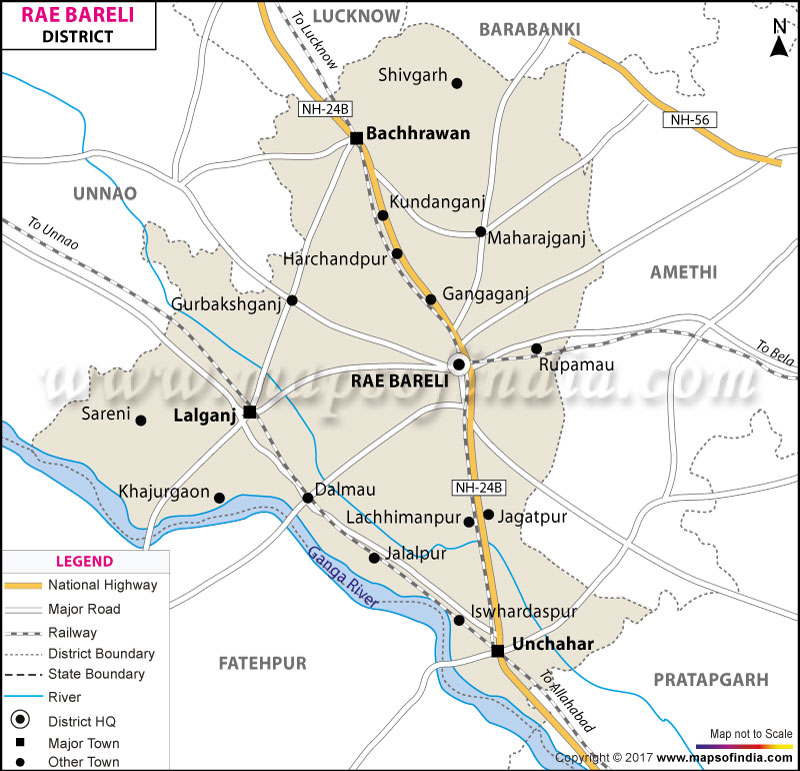
Raebareli is a perfect picture of what Northern India’s rich plains are like. It is in the south of the Awadh region which is in the middle of the Great Gangetic Plain. The district is a vast green field of farmlands, at an altitude of 100 to 120 meters above sea level. That which may be considered level terrain which is very easy for people to build homes, roads, and large industries.
Water is in fact the backbone of Raebareli’s geography. The Sai River which runs through the center of the district and the main city is what we may term its life line. To the South the Ganges River which is a great river indeed forms the natural border which separates Raebareli from the Fatehpur district. These rivers along with many small canals see to it that the ground is always moist and the wells never go dry.
The soil is very rich which we call Alluvial. It is made up of fine sand and clay which the rivers have brought here over thousands of years. This fertile land is what has made agriculture the primary occupation for the local people. You will see large fields of wheat, rice, and pulses. In some areas the soil is a little salt or “sodic” but the hard working farmers have developed traditional methods to keep it productive for their crops.
Nature has also put forward beautiful wetlands and lakes as we have in the district. In the Samaspur Bird Sanctuary we have a large scale feature of six connected lakes. These lakes are like a giant bowl which collect rain water and thus they make for a perfect home for thousands of colorful birds. Also during winter the area’s geography changes as birds from cold countries like Siberia fly over thousands of miles to rest in these waters.
| Facts of Rae Bareli District | |
|---|---|
| State | Uttar Pradesh |
| District | Rae Bareli |
| District HQ | Raebareli |
| Population (2011) | 3405559 |
| Growth | 18.56% |
| Sex Ratio | 943 |
| Literacy | 67.25 |
| Area (km2) | 3371 |
| Density (/km2) | 739 |
| Tehsils | Dalmau, Lalganj, Maharajganj, Rae Bareli, Unchahar |
| Lok Sabha Constituencies | Raebareli |
| Assembly Constituencies | Bachhrawan, Harchandpur, Rae Bareli, Sareni, Unchahar |
| Languages | Hindi including Awadhi |
| Currency | Indian Rupee (INR) |
| Religion | Mostly Hinduism and Islam |
| Rivers | Ganga, Sai |
| Lat-Long | 26.24662,81.257229 |
| Travel Destinations | Indira Gandhi Memorial Botanical Garden, Behta Bridge, Samaspur Bird Sanctuary, Lala Revti Ram Ka Talab, Saheed Smarak, Bada Kuan etc. |
| Government Colleges/Universities | Panchsheel Degree College, Feroz Gandhi Degree College, Indra Gandhi Rajkiya Mahila Degree College, Sanskrit Degree College, Gurukul Degree College, Swami Satyamitranand Degree College, Baiswara Post Graduate College, Kamla Nehru Post Graduate College, Gurukul Post Graduate College etc. |
FAQs
Q1: What's the story behind the name Raebareli?
The city’s name is from the Bhars, an ancient tribe which founded it. “Rae” or “Rai” was a title which the local Kayastha rulers used who for a long time ran the town’s administration before the Mughals and British came in.
Q2: What is the top bird watching site in Raebareli?
In Samaspur Bird Sanctuary which is the best spot you will find six large lakes. There are over 250 species of birds including the beautiful guests like Greylag Geese and Pintails which fly in from as far as thousands of miles away every winter.
Q3: Which great historic structure was built by Emperor Babur?
The Shahi Jama Masjid is a primary historical site in the district. Built in the Mughal era it also at present is a beautiful example of the time’s architecture which later was renovated by Aurangzeb.
Q4: Which foods and crafts are unique to Raebareli?
The district is known for serving up Awadhi cuisine which includes great biryanis and kebabs. In the local markets also you’ll see fine “Chikankari” embroidery and traditional pottery made by village artisans.
Last Updated on : May 08, 2026
