

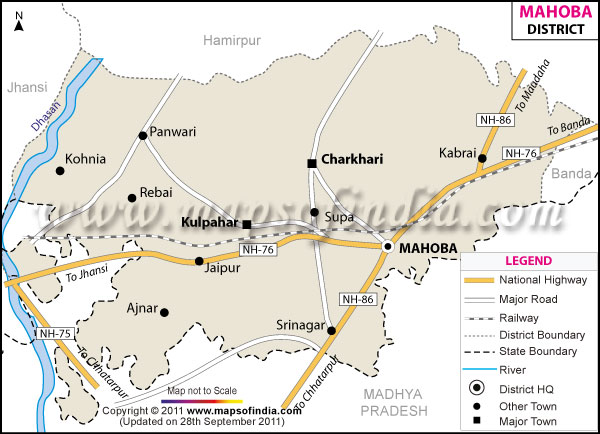



Introduction
Mahoba is a small but very popular district which is in the center of the Bundelkhand area in Uttar Pradesh. What people think of Mahoba is in terms of stories of brave heroes and ancient kings. It is a place where the rocks and hills seem to be telling stories of the past. The town is the main center for the district and also located near the border of Madhya Pradesh.
History
Mahoba’s past is a great tale of valour, kings, and old stone structures. It is in the Bundelkhand area and at one point the center of power in North India. At one time it was the capital of the Chandela Kings which ruled between the 9th and 12th centuries. That dynasty was known for their strength in battle and also for developing beautiful lakes and temples.
The term Mahoba comes from Mahotsav Nagar, which is the City of Great Festivals. That is because the Chandella kings had a great love for celebrating their victories with large fairs and prayers. Under their rule the city did very well and was protected by tall walls and rocky hills. Also they were the rulers which commissioned the famous temples at nearby Khajuraho which we may take as a sign of their support of art.
In Mahoba’s past the most thrilling aspect is the story of Alha and Udal. These were brothers which were great generals in the army of King Parmardidev. They are still the heroes of local stories for they fought 52 battles to protect their motherland. To this day people still tell the tales of how these brothers with just their swords and valor defeated powerful enemies in very long poems which also are called “Alha-Khand”.
In 1182 which saw the invasion of Mahoba by King Prithviraj Chauhan from Delhi, a very dark time for the city began which in turn brought down Chandela power. Later the region fell into the hands of the Delhi Sultans and the Mughal Emperors. Although each left their mark, we still see in the old Hindu and Jain hill top temples the legacy of the former great kings.
When the British came into power in the 1800s which saw the take over of India they included Mahoba in their territory. The local population did not approve of foreign rule which is what made them very much a part of the 1857 revolt. They put up a great fight to maintain their independence which is what their ancestors Alha and Udal also did. This spirit of standing up for what they believe in is very much a part of the local identity which we see even today.
Today Mahoba’s history is preserved in its great granite rocks and deep blue lakes. Each stone in the old fort area has a tale of a king or a soldier. It is a place where the past meets the present. For those that love stories of knights and ancient kingdoms, Mahoba is a living history book which never grows old.
Culture
In Mahoba’s culture what you see is a blend of warrior heritage and very old traditions. We still hear stories of the brave Alha and Udal brothers as if they did in fact live in the recent past. That “Bundeli” spirit which is very much a part of the people’s make up is that of great honesty, boldness and also great respect for the land and history. Here life is a cycle of seasons and in each family there is a very strong tie to the community and to their ancient past.
One of the cultural high points in our area is the Kajli Mela. The fair is held each August and at that time many from the surrounding villages turn out to see it. It is a celebration of a 12th century victory in which local warriors did what they had to to protect Mahoba’s women from an enemy king. At the fair also you will see the traditional wrestling which is a main feature as well as performers of the “Alha” folk songs which are very energetic.
In Mahoba food is another aspect that adds to the cultural experience. People here prefer simple and healthy dishes such as “Bati Chokha” which is wheat balls which they cook over an open fire. Also known for its Desavari Paan which is a Betel leaf, the highest respect here is paid in the form of a welcome gift of this Paan. This “Paan culture” has had a very long run of a few hundred years and the farmers take great pride in growing the best leaf.
Music is the heart of this district. In the "Alha-Khand" which is a very long poem they tell the story of 52 battles and to hear it at night is a magical experience. The language they use is Bundeli which is very powerful and rhythmic. This love for poetry and music we see that the culture of Mahoba is not just in the art of battle but also in the beauty of words and the power of memory.
In short Mahoba’s culture is about self pride. The people may be living simple lives but they have the bearing of kings and the spirit of soldiers. It is a place where traditions live on in music, food, and a very large sense of brotherhood. That which is a mix of natural and historical beauty causes the heart of Bundelkhand to beat very strongly in Mahoba.
Language
In Mahoba they speak a very vibrant and melodic language which is Bundeli. It is a variant of Hindi from the Bundelkhand area. What you will notice when you listen to the locals is that they speak with great assertiveness and strength which mirrors the history of the warrior past which characterized this region.
While in the home and village markets most use Bundeli, for official work they use standard Hindi. In schools and at government offices Hindi is the primary language for writing and teaching. But the local dialect is so wide spread that the Hindi which comes out of Mahoba has a sweet Bundeli flavor.
In Mahoba which is home to many ancient temples you may also hear Sanskrit during the prayers. In the markets that are very busy some shop owners have taken up some English to assist tourists that come in to see the lakes. But if you wish to really connect with a local person it is best to learn some Bundeli which will show respect.
Geography
Mahoba’s geography is different from that of the flat green plains which you see in the rest of Uttar Pradesh. It is in the Bundelkhand region which is known for its large granite hills and huge brown rocks. These rocks are millions of years old and give the district a very tough and rugged look. As you look at the horizon you see these rock peaks which rise like natural towers out of the earth.
In Mahoba, a very special aspect of the geography is its ancient man made lakes. In past hundreds of years the Chandela kings out of the rock formed these lakes for the collection of rain water. Present day we see Madan Sagar, Kirat Sagar, and Rahila Sagar which are still there. They function like large cool water tanks which in turn help the people and animals to live through the hot climate of Central India.
In this area we have a mix of red and black soil which is what you see in the Deccan plateau. It isn't as soft as soil by the large rivers like the Ganges, but does very well for certain crops. Farmers here put in a great deal of work to grow wheat, pulses, and oilseeds. Also the hilly geography of Mahoba which is a plus for stone mining we see that which in turn provides work for many local families.
The district also has very tough trees which include Neem, Peepal, and Babul that grow in the rock crevices. In Mahoba’s very high and rocky terrain you can go to the top of a hill and see for miles. It is a land which seems to have been formed like a natural fortress. What is very unique about this landscape is that ancient kings chose this place to build their capital and their strong stone temples.
| Facts of Mahoba District | |
|---|---|
| State | Uttar Pradesh |
| District | Mahoba |
| District HQ | Mahoba |
| Population (2011) | 875958 |
| Growth | 23.64% |
| Sex Ratio | 878 |
| Literacy | 65.27 |
| Area (km2) | 3144 |
| Density (/km2) | 288 |
| Tehsils | Charkhari, Kulpahar, Mahoba |
| Lok Sabha Constituencies | Hamirpur |
| Assembly Constituencies | Charkhari, Mahoba |
| Languages | Hindi, Urdu |
| Currency | Indian Rupee (INR) |
| Religion | Mostly Hinduism |
| Rivers | --- |
| Lat-Long | 25.403585,79.829006 |
| Travel Destinations | Shiv Tandav, Jain Tirthkar, Khakraha Math, Urmil Dam, Chandika Devi Temple, Sun Temple, Alha & Udal Chowk, Gokhar Parvat, Belatal etc. |
| Government Colleges/Universities | Govt. Polytechnic College, Nehru Bal Inter College, Mukund Lal Tiwari Inter College, D A V Inter College etc. |
FAQs
Q1: Why do we refer to Mahoba as the City of Lakes?
Mahoba is known for its large ancient lakes which are Madan Sagar, Kirat Sagar, and Rahila Sagar. These lakes were cut out of solid granite by the Chandela kings over 800 years ago which they made to store rain water for the people.
Q2: In the history of Mahoba who were Alha and Udal?
Alha and Udal which are the famous brother warriors that served King Parmardidev of the Chandela dynasty. They are local heroes which tell of their brave performance in 52 battles and still today their tales are sung in folk songs.
Q3: What’s special about the paan grown in Mahoba?
Mahoba is the home of Deshvari Paan which is a unique variety known for its soft and easy to chew quality. This Paan is a fine art to grow which we do in shaded bamboo structures called ‘Barejas’ that we put up to keep the plants out of the sun.
Q4: When does Kajli Mela take place?
Each year the Kajli Mela is in August or September which is a few weeks post Raksha Bandhan. It is a large scale fair where we have our roots in which we celebrate a past victory through music, wrestling, and shopping.
Last Updated on : May 08, 2026
