




Introduction
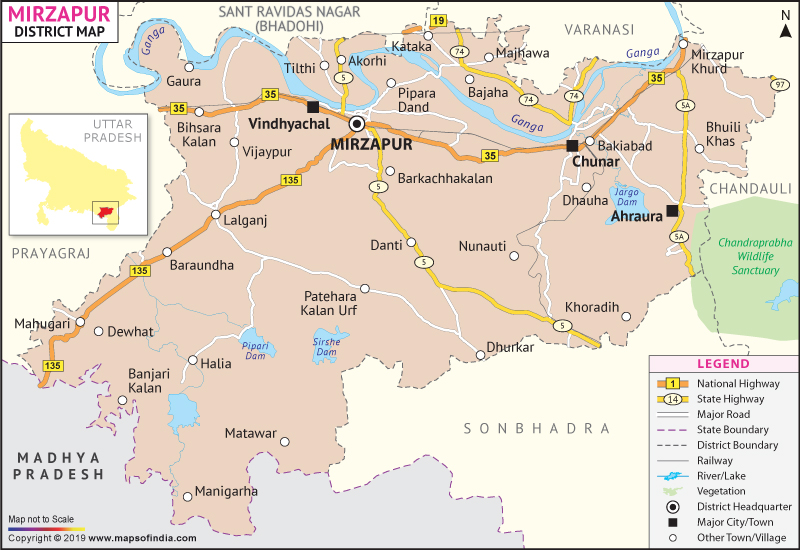
Mirzapur is a key administrative as well as cultural area in the south-eastern corner of the Indian state of Uttar Pradesh. The district lies on the banks of the river Ganga, and near the mountain range of Vindhya which forms a special geographical and historical position of the North Indian territory. It is the seat of the administration, commerce and culture in the region and is the headquarters town. The district is situated between the big cities of Varanasi and Prayagraj that have historically assisted the area to form as a business hub and multicultural venue.
The region is renowned for its traditional industries primarily carpet weaving and brassware, to shape its economic identity. The district has over the years been able to build a reputation as one of the key manufactures of carpets in India and meet both the domestic and international market needs. The economic base of the district is made of a diverse economic base through production of traditional craft and farm production together with small-scale industries.
The district's physical terrain is also unique. The area consists of a combination of river basins, plateau, rock hills and fertile agricultural land as opposed to an entirely flat plain in ranges of the river basins in most other regions of Uttar Pradesh. This diverse geography has determined modes of settlement, economic activity as well as cultural development. The villages are commonly seen to be surrounded by fields and rocks whereas towns are small trading and service centres.
Mirzapur district too is of religious and cultural importance. The world-renowned Vindhyachal temple complex which stands close to the district headquarters is drawing thousands of pilgrims round the year. People unite with each other at festivals and religious events held in the district from various locations across northern India, which enhances the good social life in the area. Meanwhile, recent decades have gradually changed the district due to the development projects of modern thoroughfares, the extension of educational institutions.
History
The history of the district is able to represent the wider history of political and cultural changes in northern India. It has been indicated by evidence that the region was at least inhabited since ancient times. Prehistoric remains and rock paintings in the neighboring areas show that the early human settlements took place in the adjacent hills and forests thousands of years ago. These primitive people relied on hunting, gathering and primitive agricultural practices to sustain their lives.
During the ancient and early medieval times, the area was a constituent of bigger kingdoms that ruled the Ganga valley. The fact that it was close to the river was what made it an important route of trade and communication between eastern and northern India. There was also the movement of merchants, travelers and pilgrims who went through the area thus exposing the area to cultural interaction and economic activities.
The current town was built much later on in the 1735 under the rule of the British East India company. The city was founded to be used majorly as a trading centre that would ease business along Ganga River. The position was perfect since transporting goods through rivers was one of the most effective business activities within that period of time, thus the destination became the location to collect and distribute the agricultural products, cotton and other products to all. Even the name Mirzapur shows the influence of the Persian language as it is a mixture of the title Mirza and Persian word pur (meaning settlement or town).
Mirzapur district developed into a significant and major commercial centre of northern India under British colonial rule. Goods which were carried along the Ganga were deposited in the warehouses then shipped to other regions in the country. The British government also integrated infrastructure like roads, office buildings and railroads which added further power to the district in terms of contribution to the regional trade networks. The district was characterized by production of textile and carpet during the nineteenth century and they progressed to become a significant economic activity.
The area also joined the overall movement of nationalism in the campaign against Indian independence. The early twentieth century brought political awakening of people as the leaders of nationalistic movements promoted opposition toward colonization. Political mobilization among the locals involved holding public meetings, protests, and also being a part of the Non-Cooperation and Civil Disobedience movements. A good number of students, workers, and farmers became part of the national movement, proving the participation of the district in the greater struggle for freedom.
The district was incorporated into the new state of Uttar Pradesh that arose after the year 1947 following the independence. The development policy was aimed at enhancing productivity of agriculture, building irrigation systems and promoting local industries. That carpet weaving remained a large export-driven business, and the district experienced economic and social change slowly, as new educational institutions and construction projects were built in the new district.
Culture
Vindhyachal is one of the greatest cultural centres in the district that houses the Vindhyavasini Devi temple. There are great numbers of pilgrims who visit this sacred place and particularly during Navratri festival. The travelers come from various regions of India with the aim of performing prayers and attending religious events. This temple has helped the district to acquire a powerful identity as a pilgrimage destination in Northern India.
Traditional fairs, local markets also significantly impact the cultural world. Such meetings are usually attended by folk performances, music, dancing, and selling of handicraft items. The rural populations have seasonal fairs related to the religious holidays, that of harvest and local legends. These events enhance social groups and the continuity of cultural traditions which have been in practice for generations.
As an economic and a cultural tradition, the carpet weaving industry of the district is well-known. The craftsmen make elaborate designs using ancient methods that have been transferred to come to the current generation. These carpets are sent to most countries and they are appreciated due to their artistry and artistic value. Other crafts like brassware, pottery and wooden pieces, among others make the region part of the cultural heritage along with carpets.
The cuisine of the Mirzapur district is representative of the general cuisine of eastern Uttar Pradesh. Food is usually consumed in the form of wheat or rice, lentils, vegetables and dairy products. Local markets also offer such popular snacks as samosas, kachoris, and sweets known as jalebi or peda. On special occasions and festivals, families make elaborate meals which are indicative of local customs in cooking.
It is quite common that social life in the district is based on family and community relations. Marriages and other societal rites engage lengthy rituals, music, and relatives meetings. Traditional clothing like sarees, dhotis and kurta-pajamas are still used in ceremonies given that the contemporary way of dressing has become prominent in the towns and cities.
Language
The linguistic diversity of eastern Uttar Pradesh is seen in the language of Mirzapur district. The administration, education and formal communication use Hindi, as the main one. Hindi is widely spoken in cities, government buildings, and schools. However, most inhabitants do talk local dialects that are related closely to the Bhojpuri and Awadhi in their day-to-day speech, though.
The dialects are products of centuries of contact between various linguistic groups. They also include peculiar vocabulary and intonations and phrases that make local speech unique. People in the villages tend to speak in these local dialects in the village but switch to the standard Hindi language in communication with outsiders or during official duties.
The linguistic aspect of the district also includes the Urdu language, which is also especially common among a number of communities and in literary tradition. Urdu poetry and prose has always been enjoyed in a northern Indian setting and mushairas or poetry festivals are sometimes held in towns. These incidents bring out the artistic and literary background behind the language.
As a direct result of the growth of education and contemporary communication, English has become even more significant. English is frequently used as a language of instruction in schools and colleges, especially in the higher educational institutions. Younger people are not afraid of speaking English in academic or professional settings, they do not lose their fluency in Hindi and local dialects.
The use of language also contributes towards maintaining culture. Storytelling activities, folk songs and devotional singing are normally practiced in local dialects, ensuring that the traditions of local language remain alive. These or oral traditions are a way of transmitting the historical memory, values, and cultural heritage from one generation to the next.
Geography
Mirzapur district is a geographical district from many other districts in Uttar Pradesh. The river Ganga moves along the northern boundary of the district and affects the formation of the local environment significantly. The river sustains farming as it supplies alluvial soil and water that is used to aid in farming. It has also been used in the past as a significant trade route for commerce. Smaller rivers and occasional streams augment the drainage system of the area also.
The south-western part of the district is dominated by the Vindhya hills. These hilly uplands are a source of minerals, water falls and forest. The landscape in this region is less arable than the plains and this has impacted the lifestyle of settlement and farming. The number of villages are concentrated in valleys or close to water sources where farming can take place.
The Mirzapur district is of subtropical climate. Summers are very hot and dry as temperatures can go over 40°C. The onset of the monsoon season is at the time of June and extends to the month of September that features most of the annual rainfall. The season of winter between November and February is cool and more comfortable, thus offering the most ideal period in terms of travelling and outdoor activities.
Agriculture is the leading mode of employment by a good percentage of the people. Wheat, rice, that is first, pulses, and oilseeds are major crops. Besides farming crops, livestock rearing is also a source of livelihood in rural areas. Canals, tube wells, and river water are some of the aids to irrigation, yet rainfall has remained an important factor in agricultural output.
It also has some natural attractions such as hills, waterfalls and forested areas within the district, which visitors in the nature and pilgrimage tourism envision. Along with the cultural and religious values of the area, these sceneries make the Mirzapur district an unusual identity in Uttar Pradesh.
| Facts of Mirzapur District | |
|---|---|
| State | Uttar Pradesh |
| District | Mirzapur |
| District HQ | Mirzapur |
| Population (2011) | 2496970 |
| Growth | 18.00% |
| Sex Ratio | 903 |
| Literacy | 68.48 |
| Area (km2) | 4522 |
| Density (/km2) | 561 |
| Tehsils | Chunar, Lalganj, Marihan, Mirzapur |
| Lok Sabha Constituencies | Mirzapur |
| Assembly Constituencies | Chhanbey, Chunar, Majhawan, Marihan, Mirzapur |
| Languages | Hindi, Urdu, Agariya, Awadhi |
| Rivers | Ganga |
| Lat-Long | 25.01344,82.655239 |
| Travel Destinations | Chunar, Vindhachal Temple, Tarkeshwar Mahadev, Punyajala River, Nagkund, Maha Trikon, Astabhuja Devi Temple, Shivpur, Sita Kund, Kantit Sharif, Vindham Waterfall etc. |
| Government Colleges/Universities | Narottam Singh Padam Singh Government Degree College, Smt. Indira Gandhi Rajkiya Mahavidyalaya, K.B. P.G. College, G.D. Binnani P.G. College, Kamala Arya Kanya Mahavidyalaya, Vansthli Mahavidyalaya, Rajdeep Mahila Mahavidyalaya, Lalta Singh Rajkiya Mahila Mahila Mahavidyalaya, Ramkhelawan Singh P.G. College, Sri Bodhan Ram Mahavidyalaya, Narottam Singh Padam Singh Rajkiya Mahavidyalaya, Sri Krishna Degree College, Shivlok Srinet Mahavidyalaya, Vindyavasini Mahila Mahavidyalaya etc |
Last Updated on: May 08, 2026
